
Multimodal Search Optimization: The Visual Future of SEO
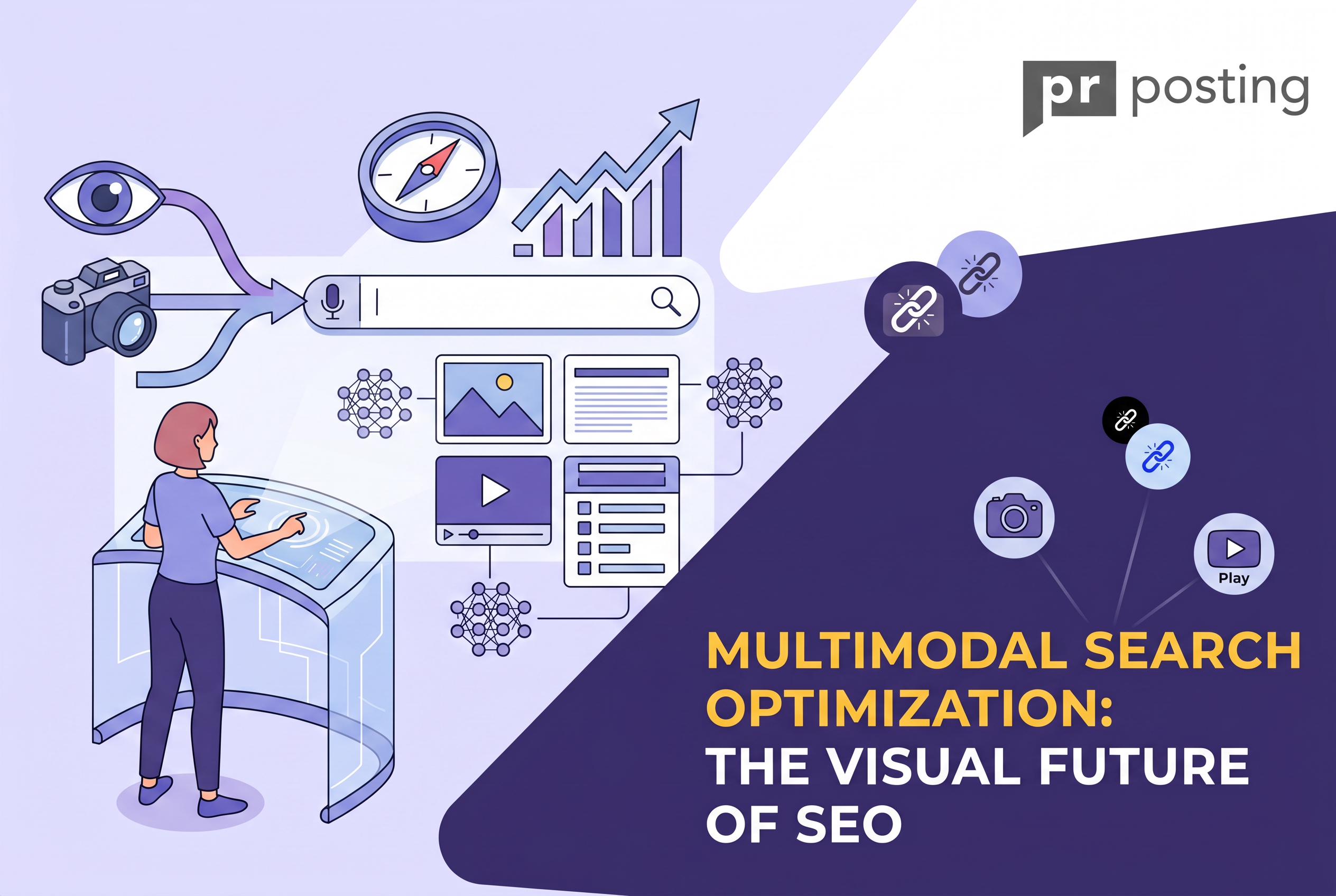
Search engines now prioritize resources that provide a multi-format signal for enhanced comprehension.
Your brand should be present everywhere. Good optimization ensures your visibility in Google Lens, Gemini, and voice search tools.
Here’s how to stay relevant. You want internet users to understand your message simultaneously in all formats.
Key Takeaways
- In 2026, online visibility is a multi-format signal.
- Brands that rely on only one format face a complete invisibility crisis.
- Multimodal search requires AI-readable visual and audio assets.
- Websites, optimized for multiple formats show 3x higher citation rates in AI Overviews.
What is Multimodal Search Optimization?
Multimodal search optimization is the practice of aligning content with how artificial intelligence systems like Gemini or GPT-5 generate AI-powered answers.
It involves creating content that allows machines to “see” images and “hear” audio contextually.
This method shifts SEO from simple text matching to comprehensive entity understanding across various media formats.
AI models now use joint embeddings to connect pixels and text. If you upload a video, the AI analyzes the visual frames and the spoken transcript simultaneously.
Multimodal website content improves retrieval accuracy by 20% compared to text-only content.
Content creators must ensure every image has descriptive metadata.
Every video needs a structured transcript. This allows the AI to “combine” different inputs into one coherent response.
The 2026 Multimodal Search Optimization Strategy
| Asset Type | Optimization Goal | Metric to Watch |
| Image | Visual Entity Recognition | Google Lens Visibility |
| Video | Temporal Segment Indexing | Key Moments Citations |
| Audio | Semantic Voice Retrieval | Voice Search Accuracy |
Why Multimodal SEO Matters in 2026
Search behavior is no longer linear. Users can take a photo of a car part, ask, “How do I replace this?” and watch a 30-second video.
Multimodal SEO ensures your content satisfies every stage of the buyer’s journey.
Without it, your brand cannot appear in modern AI overviews that rely on visual grounding.
The change is dramatic: 62% of Generation Z and millennials prefer visual search to text queries.
Multimodal SEO helps AI agents solve multimodal optimization problems like identifying complex products from blurry photos.
By providing high-resolution, labeled images, you become the most reliable data point. This makes your site the primary citation for AI agents.
How to Implement Multimodal Search Optimization
To implement multimodal optimization effectively, you must treat your media as data.
Stop using generic stock photos. Use original, high-resolution images that showcase your specific products or professionals.
This will build trust, and AI will be able to verify this through visual consistency across the web.
- Apply Visual Schema. Use ImageObject and VideoObject with deep descriptions.
- Segment Videos. Break videos into units with timestamped labels.
- Audio Transcripts. Provide text backups for all spoken content.
- Social Seeding. Post your visual findings on Reddit or other social media to build co-citation signals.
Localized GEO strategies also benefit from this. An AI might recognize a local landmark in your photo and connect your business to that specific neighborhood.
Multimodal multi-objective optimization algorithms prioritize these cross-linked signals. You’re not just writing for AI agents. You’re creating a sensory map of your brand.
Comparison: Traditional vs. Multimodal SEO
Multimodal search optimization represents a fundamental shift in how search engines catalog reality.
Traditional SEO relies on keyword indexing to match text queries with text documents. Conversely, multimodal searchuses semantic vector embeddings to understand the relationship between text, images, and audio.
The primary objective has shifted from ranking in backlinks to becoming the cited entity in AI-generated answers.
The Shift to Multimodal Search Optimization
| Feature | Traditional SEO | Multimodal SEO |
| Input Type | Text Only | Text, Image, Video, Voice |
| Processing | Keyword Indexing | Semantic Vector Embedding |
| Goal | Rank #1 in Blue Links | Become the Cited Entity in AI |
Now, AI models like Gemini and GPT-5 treat pixels as “tokens,” similar to words. This means your visual elements are no longer just decoration. They represent important data points.
Building the Multimodal Search Foundation
Every digital asset must carry semantic weight that an LLM can parse and verify.
This involves moving beyond surface-level metadata to deep, structured entity definitions that link your visuals to your core message.
Visual Search Optimization: The “Vision” Layer
AI vision models no longer simply “read” alt-text. These systems analyze pixel data to identify physical objects, extract text-in-images, and recognize brand logos.
Multimodal multi-objective optimization algorithms prioritize images that offer high clarity and clear entity relationships. To succeed, your visual content must be AI-readable and original.
How does this work? AI uses neural networks to map image features to known concepts.
- Action. You must use high-contrast, original imagery. Avoid repetitive stock photos. These provide zero information gain.
- Technical Requirement. Implement the ImageObject schema with representativeOfPage properties. This tells the AI which image defines your content.
According to a recent study, 84% of users exposed to user-generated images are more likely to trust the source.
By replacing generic stock photos with user-generated visuals, you provide new data to the model.
This increases the likelihood that your brand becomes the primary visual citation in an AI Overview.
Multimodal Optimization Problems and Brand Authority
Solving multimodal optimization problems involves aligning varied content types so they reinforce a single brand entity.
If your text says one thing and your video another, AI models will sense a lack of authority.
Consistency across text, voice, and vision builds the trust cluster required for 2026 rankings.
- Apply Semantic Consistency. Use the same terminology in video transcripts and body text.
- Optimize for Google Lens. Ensure product shots are clear and feature unique brand markers.
- Structure for RAG. Use H2/H3 headers to explain what your images depict for AI crawlers.
What is the difference between image SEO and multimodal optimization?
Image SEO focuses on alt-tags and file names. Multimodal optimization ensures the actual pixel data and the surrounding text are semantically linked for AI grounding.
Should I prioritize video or text for 2026?
Both. Multimodal SEO requires that different media types reinforce each other. AI systems prefer sites that offer multiple ways to verify the same factual claim.
Is higher information gain better for visual assets?
Yes. Original diagrams, charts, and unique photos provide new data to LLMs. This makes them significantly more citable than stock imagery found on thousands of other sites.
How do I implement GEO strategies within multimodal search?
Use localized GEO strategies by including images of local landmarks or neighborhood-specific products. Tag these visuals with geographic coordinates in your structured data.
Voice and Conversational Optimization: The “Audio” Layer
Voice search in 2026 relies on profound prompts. These are multi-step, complex spoken queries that demand conversational precision.
Multimodal search optimization ensures your brand answers these sophisticated voice requests. By tagging content for speech, you bridge the gap between written text and natural human dialogue.
Step-by-Step Voice Strategy
- Identify Conversational Clusters. Use natural language tools. Find out how people speak about their problems. Spoken language is often more fragmented than typed text.
- Apply Speakable Schema. Tag specific sections of your content. This tells text-to-speech engines which parts are easiest to read aloud.
- Embed Audio Transcripts. Provide high-fidelity, speaker-labeled transcripts. This aids LLM indexing.
According to recent research, there are currently more than 8.4 billion voice assistants in use worldwide.
Multimodal SEO thrives when you translate visual or text data into accessible audio formats.
LLMs prioritize content that sounds natural and authoritative. Use short, punchy definitions. Avoid academic jargon that confuses audio crawlers.
Video and Technical GEO
AI models now “watch” videos by processing transcripts and key frames simultaneously. This creates a rich knowledge source for generative answers.
Multimodal optimization allows your video assets to act as definitive evidence for complex user questions. Technical SEO must treat video as a primary data source, not an afterthought.
Video as a Knowledge Source
AI agents extract facts from visual frames and spoken dialogue. By aligning these signals, you increase your entity’s confidence.
Multimodal multi-objective optimization favors videos that resolve multiple sub-questions in one session.
Key Strategies for Video Visibility
- Timestamp Chapters. Use VideoObject with the hasPart schema. This allows AI to deep-link to a 30-second solution within a long video.
- On-Screen Text Optimization. Key definitions must appear as text overlays. AI vision can extract these even without audio data.
- Visual grounding. Ensure your video features physical products or locations clearly. This supports multimodal search queries.
Data from Wyzowl indicates that 91% of businesses now use video as a marketing tool.
AI scans files to find reliable information. If a video accurately matches your text, your authority rating increases.
Technical Multimodal Infrastructure
The technical layer is the invisible map for AI agents. It explains how your varied assets relate to a single brand or topic.
Multimodal search requires an AI-readable architecture that connects images, videos, and text into a unified entity.
This infrastructure prevents data silos and ensures LLMs can verify your claims across different media types.
Structured Data Integration
Use JSON-LD to entangle your entities. For example, link a VideoObject to a Product and an Author within the same script block. This builds massive trust with AI models.
Schema Assets for Multimodal Search Optimization
| Entity Type | Schema Property | Benefit for AI |
| Video | transcript | Enables text-based indexing of audio |
| Author | knowsAbout | Proves subject matter expertise |
| Image | representativeOfPage | Identifies the primary visual data point |
Solving multimodal optimization problems requires this connected logic.
Multimodal Search Optimization: The Step-by-Step Guide
To implement multimodal optimization, combine your visual, audio, and text assets into a single entity that can be verified by AI.
Start with a direct summary for AI data extraction. Then, match file names with titles.
Add unique data, such as source charts. Finally, create an llms.txt file to direct search bots to your most valuable assets.
The “Answer-First” Block
Lead every section with a 40 to 60-word summary. This allows AI models to extract your core claim instantly.
Asset Correlation
Ensure filenames like blue-widget-install.jpg mirror your video titles. This reinforces the semantic link between different media.
Information Gain Injection
Add a unique table or chart that does not exist elsewhere on the web. AI models prioritize “utility surplus” content.
llms.txt Deployment
Create an llms.txt file at your root directory. This specific file directs AI crawlers to your high-value multimodal assets.
Modern search engines no longer simply index text. They integrate various media types to provide comprehensive answers.
By strictly following technical protocol, you ensure your brand is the primary source of information for complex, multi-sensory queries.
Multimodal SEO thrives on precise content correlation. If your image filename matches your H3 heading, the AI builds higher confidence in your topical authority.
Common Mistakes to Avoid in Multimodal Search
Avoiding common multimodal optimization problems is just as important as the optimization itself.
Many brands fail by hiding their best data at the end of long posts. AI models have a limited “attention window.” If the answer is not direct, the agent moves to a competitor’s site.
Hiding the Best Answers
Putting the answer at the bottom of a long blog post is a mistake. AI will stop reading before it finds your solution.
Low-Contrast Media
Avoid images that are too busy or too dark. AI-based computer vision models have difficulty tokenizing pixels with low contrast.
Missing Entity Context
Failing to use the mainEntityOfPage schema leaves the AI guessing. Be explicit about your page’s purpose.
Multimodal SEO Checklist
Use this checklist to solve multimodal optimization problems before they impact your traffic.
Speed and clarity are your top priorities. If your page loads slowly, it loses its right to receive an “instant response.”
2026 Multimodal Search Optimization Checklist
| Element | Requirement | AI Benefit |
| Alt-Text | 12 to 15 words describing intent | Connects image pixels to the user query |
| Video | Timestamped transcript included | Allows deep-linking to specific solutions |
| Schema | mainEntityOfPage defined | Establishes definitive topical authority |
| Speed | Load time under 1.5 seconds | Necessary for real-time AI retrieval |
When your server takes 2 seconds to respond instead of 0.2 seconds, search engine bots can access 90% fewer pages in the time they have.
These multimodal search signals are the new foundation for AI visibility.
FAQs
What is multimodal search?
It is a search method where users use multiple inputs, like an image and a text prompt, simultaneously.
Does multimodal search optimization help with AI Overviews?
Yes. Sites with optimized media have a 3x higher chance of being cited as a visual source.
How can I track my multimodal visibility?
Monitor Google Search Console for “Google Lens” traffic and “Video Snippet” impressions.
What is the main goal of multimodal optimization?
The goal is to provide AI agents with clear, correlated data across text, images, and video to increase citation likelihood.
How does an llms.txt file help multimodal search optimization?
It acts as a map for AI bots. It points them directly to your most informative data blocks and media.
Can multimodal multi-objective optimization improve my local ranking?
Yes. Citing local visual entities and neighborhood landmarks strengthens your localized GEO strategies.
Does video transcript quality affect SEO?
Yes. Accurate, speaker-labeled transcripts are essential for LLMs to index video content correctly.
What is the benefit of a “Speakable” schema?
It highlights specific paragraphs for voice assistants. This increases your chances of being the spoken answer.
How does multimodal SEO help with brand trust?
Consistency across video, text, and images proves you are a reliable source. AI rewards this with higher citation rates.



More Like This