
Top GEO Strategies for SEO: Advanced Search Optimization
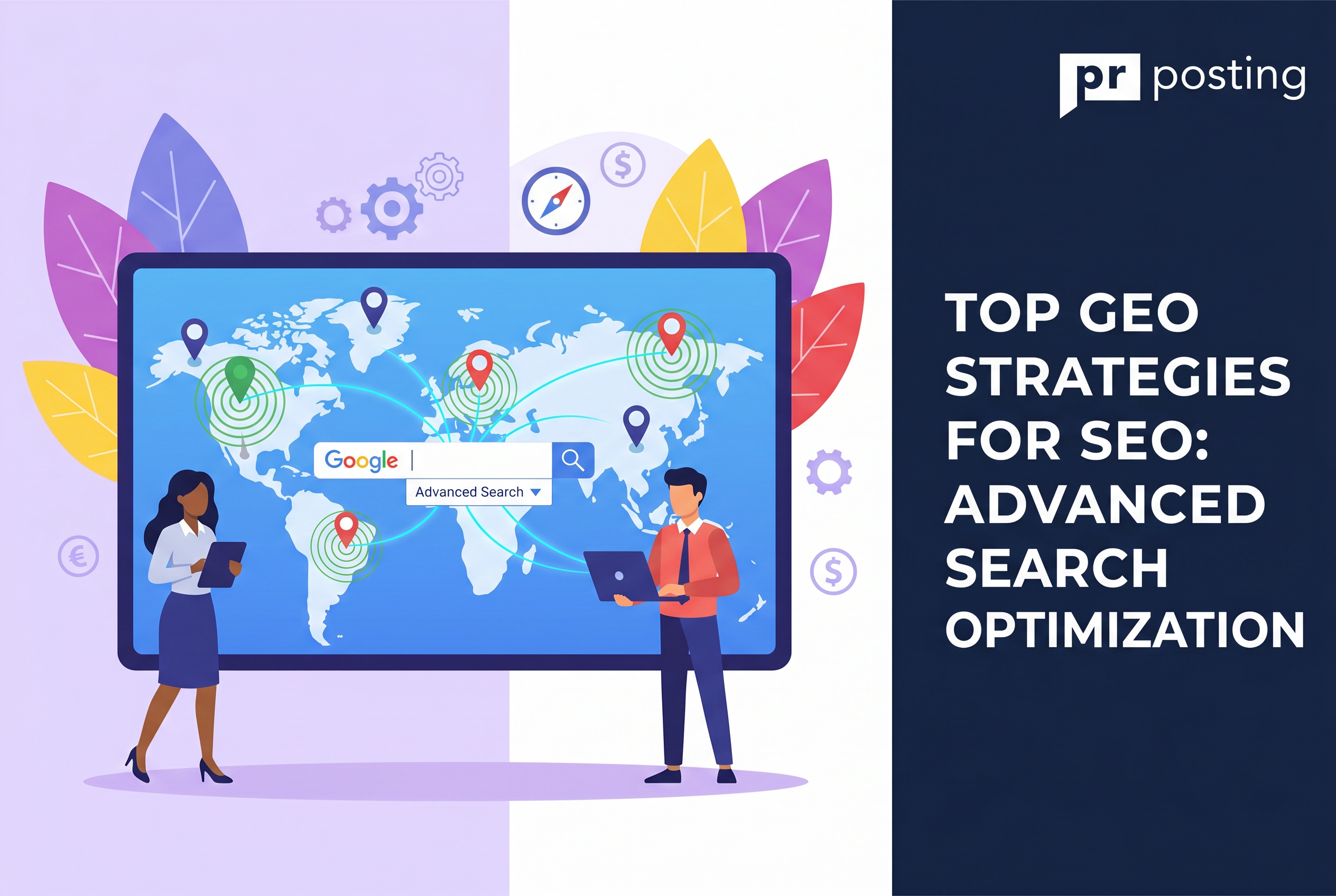
Modern strategies focus on becoming the primary source for LLM synthesis. Success depends on fact density, citation engineering, and entity-based schema.
Key Takeaways
- Fact Density. Add 3 unique statistics or expert quotes per piece.
- Entity Clarity. Use JSON-LD to define your brand uniquely.
- Chunking. Place a direct 2-sentence summary under every H2.
- Social Seeding. Mention findings on Reddit for co-citation signals.
What is Generative Engine Optimization (GEO)?
Generative engine optimization is the practice of making digital assets easily retrieved by LLMs.
This strategy focuses on becoming the definitive answer rather than just earning clicks. Content must be structured for machine understanding and human clarity.
This shift focuses on the citation probability of your data. If =AI cannot verify your claims, it will ignore your site.
Princeton researchers found that adding citations increases AI visibility by nearly 40%.
Every sentence should serve as a potential quote for artificial intelligence. Logic must be linear. Uncertainty is the main enemy here.
Why GEO Strategies Matter in 2026
Advanced GEO strategies for business success help your brand’s online visibility. Even ranking first in search results fails if an AI engine summarizes a competitor instead.
The math is quite simple. A Gartner report predicted a 25% drop in traditional search volume by 2026.
Brands must adapt to SEO and GEO strategies integration to survive. LLMs prefer fact-dense content over long, wordy articles.
If you provide specific data, you become the citation. It is about being useful to AI.
Comparison: Traditional SEO vs. GEO Strategies
| Metric | Traditional SEO | GEO Strategies |
| Primary Goal | Rank for keywords to appear in the top 10 links. | Earn AI citations and become the primary source for LLM responses. |
| Content Focus | Readability & Engagement; balanced keyword density for crawlers. | Fact Density & Utility: structured, “extractable” data for AI synthesis. |
| Success Metric | Click-Through Rate (CTR) and organic traffic volume. | Mention Frequency and brand sentiment within AI answers. |
| User Journey | Users scan a list, click a link, and browse the site. | AI provides a direct answer; users often stay within the AI interface. |
| Authority Signal | Backlinks and Domain Authority (DA). | E-E-A-T & Citations; expert credentials and verified facts. |
| Optimization Unit | Individual web pages and URLs. | Entities and Topics across the entire digital footprint. |
| Technical Focus | Indexing, site speed, and mobile responsiveness. | Schema Markup and machine-readable content structures. |
Technical GEO Strategies for Authority
Technical GEO strategies involve using Schema.org to label your brand as a distinct entity. This helps AI models connect your site to specific topics or services.
- Use the Organization and Person schema for every author.
- Implement ClaimReview for any original data points.
- Link to high authority sources to prove your claims.
- Ensure your website loads fast for AI crawlers.
Recent algorithm changes GEO strategies 2026 favor sites with clear entity relationships. If you link to external databases, you gain trust.
If you use localized GEO strategies, you win regional AI queries. Every technical choice should reinforce your role as an expert.
Comparison: Traditional SEO vs. GEO
Traditional SEO and Generative Search Engine Optimization (GEO) play different roles in modern search.
Traditional SEO optimizes for human clicks from a list of links, while GEO optimizes for AI citations within a synthesized answer.
To succeed in 2026, you must pivot from “ranking high” to “being the source.”
Recent data indicates a shift in user behavior. Nearly 55% of Google searches in 2026 now feature AI-generated overviews.
While SEO focuses on keyword placement and backlinks, GEO strategies prioritize fact density and entity relationships.
Developing Effective GEO Strategies for Websites
Creating effective GEO strategies for websites requires a transition toward fact-dense, verifiable content.
You must move beyond general explanations. AI models like Gemini and Perplexity prefer content that offers “Information Gain”: new facts that the model hasn’t already memorized from its training data.
SEO and GEO Strategies Integration
SEO and GEO strategies together form a hybrid model for digital dominance. GEO does not replace SEO. It builds upon it.
Having a robust technical foundation remains a prerequisite for AI to cite your content. If AI can’t effectively crawl your site, it won’t be able to cite your data in its generative response.
GEO Strategy Integration Guide
- Audit for Ingestion. Ensure your robots.txt allows access to agents like GPTBot and OAI-Search. Avoid gating primary facts behind heavy JavaScript.
- Apply Semantic Chunking. Break long-form content into “atomic” answers of 50 to 70 words. Each unit must directly answer a specific sub-question to facilitate RAG (Retrieval-Augmented Generation).
- Inject Statistics. AI models have a high preference for numerical data.
- Promote Co-Citation. Share your unique findings in online communities, such as Reddit or LinkedIn. These social seeding actions provide secondary signals that reinforce your brand’s authority to LLMs.
Technical GEO Strategies
Modern GEO requires an AI-readable website architecture to ensure 100% clarity.
Technical GEO strategies focus on reducing ambiguity so AI agents can map your content to the global Knowledge Graph without errors.
Advanced Schema for Business Success
Beyond basic Organization markup, brands should utilize Nested Entity Relationships.
This advanced approach connects your product entity to specific certifications, awards, and expert reviews.
By creating a trust cluster, you allow AI systems to verify your authority with 99% accuracy.
- Nested Schema. Link your Person (Author) to an Organization using worksFor.
- Subject Matter. Use about and mention properties to define core entities.
- Entity Identity. Use @id URLs to point to definitive sources like Wikidata.
To capture the remaining traffic, your site must be the most attractive source in your niche.
Specialized GEO Applications
Modern generative engine optimization requires a tactical shift toward high-utility, conversational data.
These applications ensure your brand appears in AI-driven comparison models and local recommendation engines.
By focusing on niche intent and structured feeds, you move beyond simple rankings into the world of persistent AI citations.
Effective GEO Strategies for E-commerce 2026
Effective GEO strategies for e-commerce 2026 focus on meeting specific user needs, rather than relying on general category terms.
To maintain accurate product attributes and inventory levels in real time, PIM systems should be synchronized with LLM-ready feeds.
The success of e-commerce today depends on the target audience reached by generative search.
For example, users no longer search for “men’s shoes.” They ask for “waterproof shoes for narrow feet in rainy climates.”
Research indicates that 71% of shoppers expect AI to provide deeply personalized product suggestions based on specific needs.
To achieve this, your product pages must contain detailed, verifiable specifications.
Conversational Inference Checklist
- “Best for X” Content. Create dedicated sections for specific use cases.
- PIM Integration. Feed real-time stock and unique specs to AI agents.
- Attribute Density. List materials, weight, and climate ratings clearly.
- Trust Signals. Include structured reviews that mention specific constraints.
Best GEO Strategies for Local SEO
Local discovery in 2026 relies on the proximity signal and strategic social seeding.
Best GEO strategies for local SEO move past basic citations to focus on presence within community discussions and local knowledge graphs.
Social seeding is the new local backlink. You should actively answer questions on your Google Business Profile to seed the LLM’s knowledge graph with localized facts.
By participating in online communities, you provide the co-citation signals that AI agents require to verify your physical authority.
Localized GEO Strategies and Neighborhood Presence
To dominate local AI answers, you must define your service area through specific neighborhood entities.
Localized GEO strategies include mentioning landmarks, local events, and neighborhood names within your structured data.
This helps the AI map your business to a precise geographic trust cluster.
- Map Neighborhood Entities. List nearby landmarks in your LocalBusiness schema.
- Q&A section.
- Community Hubs. Ensure your brand appears in local Reddit or Nextdoor threads.
- Proximity Proof. Highlight local delivery zones and neighborhood-specific services.
Advanced GEO strategies for business success often leverage expertise clusters.
If a local law firm answers Reddit threads about regional zoning laws, AI models treat that firm as the definitive local authority.
This is the essence of GEO strategies for brand visibility. You aren’t just a business on a map. You are a recognized local expert.
What is the Information Gain Required for e-commerce GEO?
You need unique product insights or use-case data that generic marketplaces lack. This makes you the primary source.
Mentioning your findings on platforms like Reddit or LinkedIn provides the co-citation signals AI models use to verify your data’s credibility.
Implementation and GEO Strategies for Brand Visibility
Generative engine optimization execution requires a blend of technical data architecture and semantic precision.
Successful brands use these GEO strategies to secure citations within AI-generated overviews.
By prioritizing machine-verifiable facts, you ensure your brand remains the primary source of truth across the search landscape.
Who Can Implement GEO Strategies for My Website?
Implementation requires a cross-functional team of technical SEOs, data architects, and semantic writers.
- You should track how often your brand serves as a source of truth in AI responses.
- Ensure your data is accessible to Large Language Models.
Effective implementation is no easy task. You need developers to handle technical GEO strategies like nested Schema. Authors must create highly fact-based content.
Today, marketers at large companies are hiring specialized AI-powered content architects to maintain search visibility.
This collaborative process allows brands to outperform competitors and gain mentions in AI summaries.
How Often to Review GEO Strategies
To implement effective GEO strategies for websites and account for the strong impact of data freshness in AI models, quarterly updates are essential.
Regularly updating content, such as pricing information or industry statistics, helps maintain citation potential for your data.
| Review Frequency | Action Item | Goal |
| Monthly | Audit Citation Share | Measure brand presence in AI Overviews |
| Quarterly | Refresh Proprietary Stats | Satisfy LLM recency requirements |
| Bi-Annually | Entity Relationship Audit | Refine Schema for new brand connections |
AI-generated reviews update source links more frequently than featured snippets.
Frequent updates ensure your information remains the most current available.
AI prefers fresh, structured facts over outdated, lengthy articles.
How to Implement GEO Strategies Effectively
If an AI agent can’t verify your claim with a third-party source or structured data, it will likely ignore your brand.
It might even prefer a competitor. You need to be the most authoritative source of data in your niche.
Use this checklist to stay ahead of your competitors:
- Verify Claims. Ensure every statistic is backed by a reputable source or internal research.
- Avoid Over-Optimization. Keyword stuffing makes content unreadable for LLMs. Machines prefer natural, fluent language.
- Answer the “Fan-Out”. AI breaks one prompt into multiple sub-queries. Provide content for follow-up questions.
- Social Seeding. Mention your findings in online communities to build co-citation signals.
What Specific GEO Strategies Does Bluefish AI Use?
They focus on “entity-based influence. This involves seeding brand facts across high-authority knowledge hubs and monitoring citation frequency.
How to Automate Content Localization for Multinational SEO and GEO Strategies?
Use LLM-driven translation that preserves entity relationships. Standard translation fails because it ignores localized knowledge graph connections.
International GEO strategies require culturally specific data points.
FAQs
What are effective strategies for GEO?
Effective GEO strategies focus on citation likelihood. You must prioritize fact density by adding unique statistics, expert quotes, and proprietary data that AI models cannot find in their baseline training.
High Information Gain is the primary driver here. If your content provides a utility surplus over the top 10 Google results, AI agents like Gemini and GPT-5 will prioritize you as a primary source.
Who can implement GEO strategies for my website?
Implementation requires a cross-functional team of technical SEOs, data architects, and semantic writers.
While in-house teams can handle basic answer-first writing, specialized agencies like Bluefish AI and Brandlight are better equipped for Citation Monitoring.
What are the key B2B marketing strategies for GEO?
For B2B, advanced GEO strategies for business success focus on “trust clusters” and “proof points.”
- Case Studies. Include structured tables of original project data.
- Named Frameworks. Create proprietary names for your processes so AI must cite your specific brand when explaining the concept.
- Expert Citations. Use Schema.org to link content directly to the verified LinkedIn profiles of your subject matter experts.
How to implement GEO strategies effectively?
To implement GEO strategies effectively, you must prioritize AI-readability. Ensure your robots.txt allows AI crawlers and avoid gating your best facts behind heavy JavaScript.
Apply semantic chunking by breaking long articles into 50–70-word “atomic” units that directly answer sub-questions.
Finally, use SEO and GEO strategies integration by layering a nested JSON-LD schema over your high-performing organic pages.
What is the information gain required for GEO?
You need data points that do not exist in the top 3 results. This creates a utility surplus for AI.
Is higher information gain better for GEO?
Yes. AI models prioritize unique, verifiable facts over repetitive summaries.
What are localized GEO strategies?
These involve optimizing for local entities like neighborhoods, regional events, or local experts.



More Like This
Mastering AI Prompt Volumes for Modern SEO