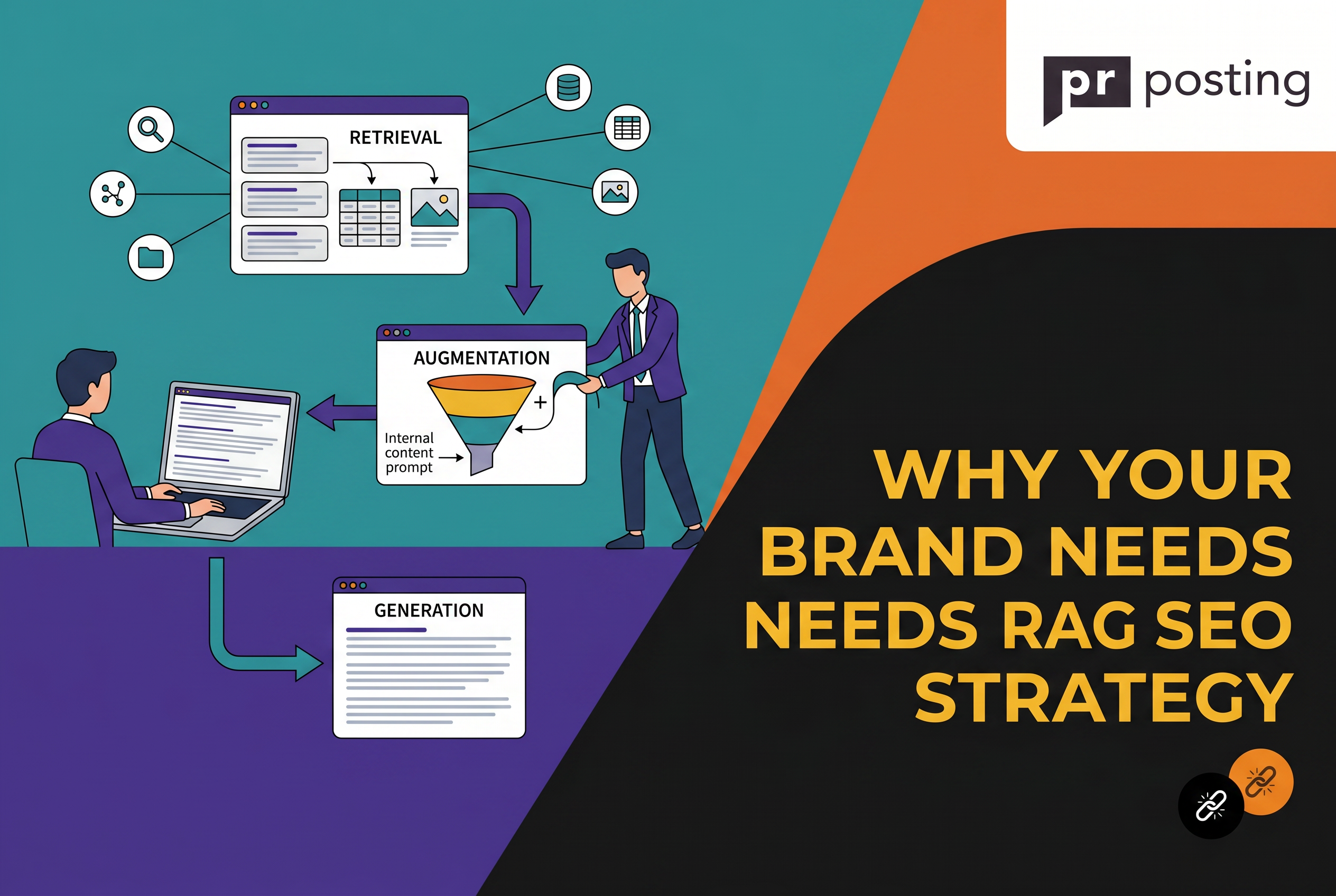

How to Rank High in AI Overviews in 2026: An Effective Strategy
Currently, high-quality data and a clear structure determine who will be cited.
Your content should serve as verified source material for machine learning synthesis.
Key Takeaways for 2026
- Identity over Keywords. Your brand authority outweighs simple keyword matching.
- Structure over Length. Hierarchical H1-H4 tags beat massive word counts.
- Citations over Backlinks. Mentions in AI answers are the new PageRank.
- Information Gain. Unique data points earn the most citations.
How to Optimize for AI Overviews
Google no longer searches for your page. It synthesized it.
To improve visibility in Google AI overviews, your site must provide raw, reliable facts.
AI models look for these “seeds” to build a response. If your data is messy, the AI skips you. Clarity is the only currency left.
What are AI Overviews?
AI overviews are synthesized snapshots generated by LLMs to answer queries directly.
These summaries combine data from multiple web sources. They aim to provide immediate value without requiring a user to click a link.
How to Rank for AI Overviews in 2026
You must place a 50-word “atomic” answer under every H2. Write it simply. Use an active voice.
This allows AI search engines to cite your text without changing it. It reduces the chance of a hallucination.
Basically, you are doing AI’s job for it.
- Use a direct statement first.
- Follow with a supporting fact.
- Avoid using pronouns like “it” or “they.”
- Keep the sentence count under three.
How do Google AI Overviews Work?
AI Overviews function by identifying the most unique and verified information.
Google’s Diversity Ranking algorithm hates copy-pasted content. If you just repeat Wikipedia, you will fail.
To rank in AI overviews, you need a new angle or insights. This means providing a perspective that does not exist elsewhere.
Add value through:
- Proprietary survey results.
- First-person case studies.
- Experimental data.
- Original technical frameworks.
Comparative Table: Traditional SEO vs. AI-Native SEO
Understanding what AI overviews means for SEO requires a shift in logic. You need to focus on cosine similarity.
This is a measure of how well your text matches the user’s mathematical intent. Tables help AI quickly understand these properties of “is” or “has.”
| Feature | Traditional SEO | AI-Native SEO |
| Focus | Keyword Frequency | Entity Density |
| Goal | Clicks to Page | Citations in Answer |
| Structure | Long-form Prose | Atomic Passages |
| Signal | Backlinks | Information Gain |
Summary
- Eliminate introductory fluff to improve extraction rates.
- Validate all claims against authoritative databases.
- Keep important content visible. Avoid hidden tabs.
- Structure every H2 as a direct answer to a user query.
Entity Discovery and Knowledge Modeling
Stop thinking about keywords. Start thinking about concepts.
Before you write, identify the core entities. Look at “People Also Ask” patterns. See how top pages link different ideas.
How to track AI Overviews Rankings
This includes monitoring the relationships between these entities over time. Use tools that show which of your materials are displayed in the knowledge graph.
Filter out entities that don’t help the user take the next step. If they’re redundant, remove them.
How to See if You Are Featured in AI Overviews
Check Google Search Console. Look for deep impressions with low click-through rates. This often means you are the source of an AI overview.
You can also use manual checks in Incognito mode. The best way is to monitor “Attribution Links” within the AI box.
Trust and the Contextual Layer
Google only cites sources it can verify through stable data patterns.
In 2026, proving your identity is the new link building. This process is called Entity Resolution.
It connects your content to a verified person or brand. If AI cannot verify your expertise, it will ignore your data.
Summary
- Entity Resolution. Link your content to a verified source.
- Structured Identity. Use JSON-LD to bridge authors and their credentials.
- Multi-Modal Presence. Combine text with video to capture visual AI slots.
- Verification. Ensure all claims link to recognized primary sources.
Advanced Schema and Knowledge Graph Density
How to Improve Visibility in Google AI Overviews
To improve visibility in Google AI Overviews, use JSON-LD to define concept relationships.
This code tells AI exactly who said what. It also links your location in the digital web of data.
Use the FAQPage and Person schema to anchor your content to a verified identity.
What AI Overviews Means for SEO
It is a shift toward explicit data. AI models need clear maps to understand your site.
Without schema, you are just a wall of text. With it, you are a data point in the Google Knowledge Graph.
This increases the chance of being the primary citation for specific queries.
- SameAs Attributes. Link author profiles to LinkedIn or professional portfolios.
- Organization Schema. Define your brand as a distinct entity.
- Entity Linking. Connect your topics to existing Wikipedia entries in the code.
Multimodal AI Integration and AI Overviews in 2026
How to Rank for AI Overviews in 2026
You can rank for AI overviews in 2026 by providing answers in several formats.
AI outputs are now visual. A short video with a clean transcript often beats a long blog post.
This is true for procedural or “How-to” questions. Multi-modal content feeds the AI’s need for diverse media types.
How do Google AI Overviews Work with Video
They extract frames and audio cues to find specific steps.
By embedding a video at the top of your guide, you provide an alternate data stream.
Use the VideoObject schema to define your chapters. This helps AI jump to the exact answer a user needs.
- Embed Video. Place a 60-second summary at the start of your article.
- Transcripts. Provide text that matches the video audio word-for-word.
- Visual Aids. Use original charts that AI can scrape as separate images.
- Chapter Markers. Use schema to label the specific time stamps of your answers.
Why Context Modelling Matters for AI Overviews
You must model your content based on the user’s current situation.
Are they a beginner or an expert? A marketer needs a workflow, while a beginner needs a definition.
To be cited in AI reviews, you essentially need to understand which of these criteria you meet.
Think about the relationship between concepts. Do not just repeat keywords.
Use “is-a” or “has-a” logic to build your paragraphs. For example, “SEO is a subset of Marketing.” This helps the LLM categorize your information correctly.
You have the framework for 2026. Now, audit your current top pages.
Are they just text? Add a schema. Record a short video for your best guide.
Check your author profiles. Do they include links to your portfolio?
Monitoring & Tracking Your Performance in AI Overviews
To ensure AI visibility, you need to measure your presence in generative summaries and neural citations.
You need to see how often models use your data to respond to users.
Summary
- Shift focus from keyword rank to “Share of Model” metrics.
- Monitor “Search-to-Synthesis” ratios in updated search consoles.
- Prioritize citation velocity to build long-term topical authority.
- Optimize technical speed and schema for instant AI extraction.
How to Track AI Overview Rankings
Measuring success now means tracking how often an LLM cites your brand.
You must know how to track AI overviews rankings to stay relevant as chat interfaces replace standard lists.
How to Track AI Overviews Rankings over Time
It involves using specific filters in Google Search Console or third-party API monitors.
You should look for the “AI Mode” report to compare standard clicks against synthesis impressions.
High citation counts suggest your content has high Information Gain.
Tools for Tracking AI Overviews 2026
Google Search Console
Look for the “AI Mode” filter. This shows your “Search-to-Synthesis” ratio. It tells you if users read your site or if AI just summarizes it.
Monitoring & Visibility Platforms
These specialized tools are used by brands to track mentions, “share of voice,” and citation frequency across major AI engines.
| Tool Name | Specialized Capabilities | Supported Platforms |
| LLMClicks | Real-time continuous monitoring and citation source analysis. | ChatGPT, Perplexity, Gemini, Copilot |
| Profound | High-end enterprise tracking. Monitors “Agentic” behavior and crawlers. | ChatGPT, Gemini, Perplexity, SearchGPT |
| Semrush AI Toolkit | Maps brand market share within AI responses and performs AI audits. | ChatGPT, SearchGPT, Gemini, Perplexity |
| Peec AI | Tracks brand sentiment and mentions, updating every 4 hours. | ChatGPT, Gemini, Perplexity, Claude |
| XFunnel | Converts keywords into prompts to measure persona-based visibility. | ChatGPT, Gemini, Perplexity, SearchGPT |
| Otterly.AI | Focuses on automated prompt generation and reporting. | ChatGPT, Perplexity, Gemini |
| Surfer AI Tracker | Centralizes visibility to see if brands are consistently cited. | SearchGPT, Perplexity, Gemini (AIO) |
Checklist: The 2026 AIO Audit
Use this checklist to see how to improve visibility in Google AI overviews and secure your spot in the summary.
Is There a 50-word Summary Under Every H2?
LLMs love pre-digested information. Provide a clear summary at the start of every section.
This helps the model extract your main point without scanning the whole page. This increases the likelihood of a direct link.
Does the Page Contain Unique Data?
Information Gain is a massive ranking factor now. Do not just repeat what others say.
Include unique statistics, a case study, or a new framework. If your data is rare, the AI must cite you to remain accurate.
Is Person Schema Correctly Implemented?
Identity matters more than ever. The model needs to know a real human wrote the content.
Use Person schema to link the author to their social profiles and past work. This builds the “Trust” part of E-E-A-T.
Does the Content Answer a Specific Question?
Structure your headers as questions. Use “How,” “Why,” or “What” clearly.
AI engines look for direct matches to user queries. If you provide the best answer, you win the featured spot.
This is how Google AI overviews work at a fundamental level.
Is the Page Speed (INP) under 100ms?
Speed is not just for humans anymore. AI crawlers need to extract data instantly.
If your site is slow to process when moving to the next step (Interaction to Next Paint, INP), the model may skip it. Sites with high speed are indexed and cited much faster.
To secure a spot in generative search results, you must prioritize entity clarity. This means structuring data so that Large Language Models can parse it instantly.
Focus on high information gain and direct answers. Avoid filler language to ensure search engines view your site as a primary knowledge source.
Common Mistakes & Pitfalls
Editorial and technical errors can lead to your site being excluded from synthesis.
AI models act as filters. They discard any content that feels unreliable or difficult to process.
If your data conflicts with established facts, you lose your citation.
Google AI overviews is a shift from keyword density to factual precision.
Search engines now evaluate the extractability of your content.
If your page is a maze, AI moves on. Stick to clear, verifiable claims.
This ensures the model treats your brand as a helpful source rather than a noisy distraction.
The “Fluff” Intro: Why Models Skip Your Lead
Many writers start with broad, sweeping statements. AI models hate this. They are programmed for efficiency.
If the first 200 words offer no value, the crawler stops. You must provide the core answer in the very first paragraph.
This approach is crucial to rank in AI overviews in 2026. AI engines want direct answers, not essays.
By cutting the intro, you help the AI summarize your work.
Unverified Claims
LLMs cross-reference your claims with “ground truth” data. This includes government sites, academic journals, and established wikis.
If you claim a statistic that contradicts these sources, AI flags you.
It will not risk citing a hallucination or a lie. This is a major factor in how Google AI overviews work.
- Check every number twice.
- Link to the original study or source.
- Update old content frequently.
- Avoid hyperbole. Stay grounded in reality.
Accuracy is the foundation of digital trust. One wrong fact can tank your entire domain’s authority in the eyes of an LLM.
Hidden Text: The Extraction Barrier
Web designers often use “read more” buttons. While great for humans, these can block AI crawlers.
Some models struggle to see content tucked inside JavaScript triggers.
If AI cannot “see” the text immediately, it cannot cite it.
- Keep your best answers in the main body text.
- Avoid “lazy loading” for critical factual passages.
- Ensure your HTML structure is clean and logical.
- Test your page with “text only” browsers.
Conclusion
Mastering ranking in Google AI overviews is an ongoing process of refinement. You must treat your website like a structured database.
Every sentence should serve a purpose. Every paragraph should bridge the gap between a user’s question and a factual answer.
Focus on these pillars:
- Absolute factual accuracy;
- High information density;
- Technical transparency.



More Like This
Is Your Brand Getting Traffic from ChatGPT?
How AI Content Score Affects Link Building Success