

Mastering Custom Prompt Tracking for Answer Engine Optimization
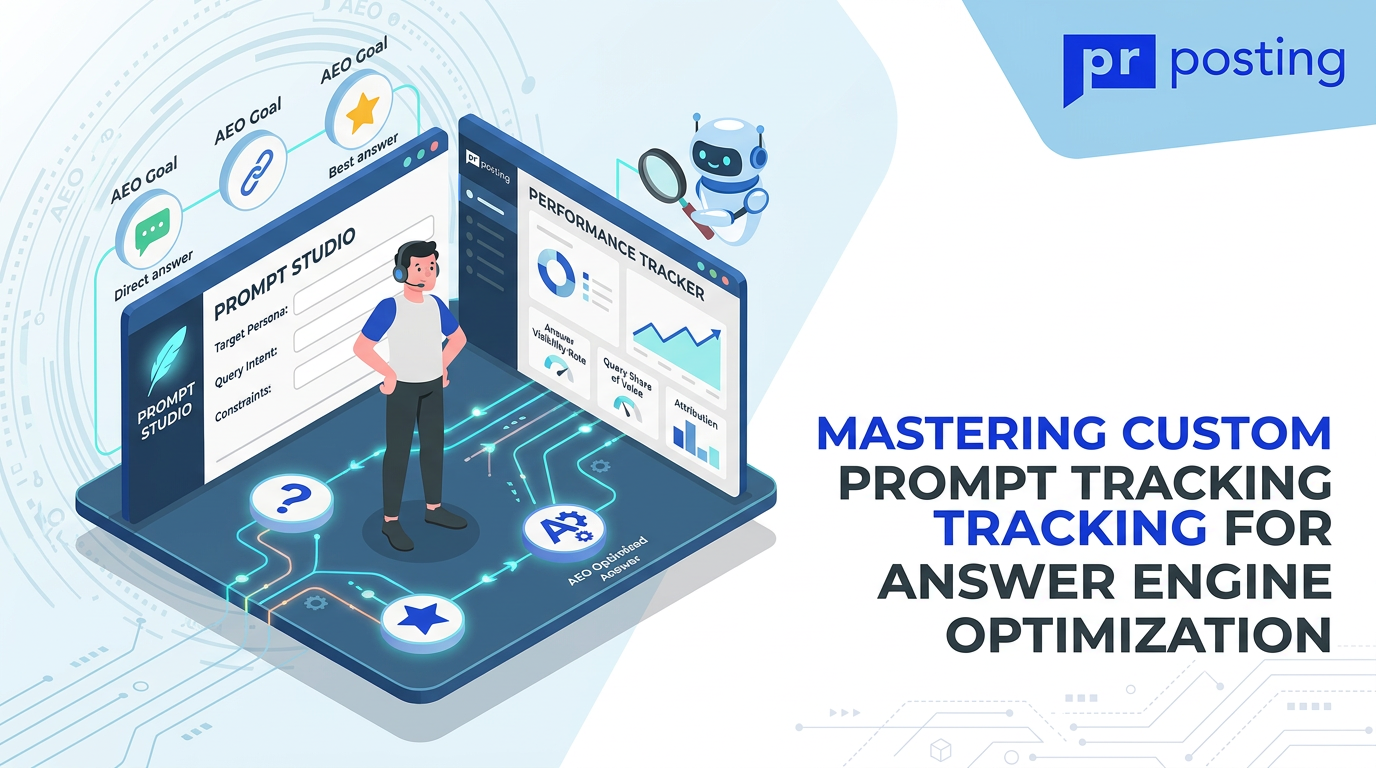
This approach allows marketers to measure AI share of voice for custom prompts across AI engines like ChatGPT, Gemini, and Perplexity.
By identifying citation gaps, you can optimize content to secure authoritative mentions in AI responses.
Key Takeaways
- AI Share of Voice (SOV) is the primary metric for AI brand visibility in 2026.
- 66% of B2B buyers use AI assistants to shortlist vendors.
- 74% of users trust AI citations more than sponsored search ads. If you lack citations, you lose trust.
- Entity-based optimization is now more effective than traditional keyword stuffing.
- AI share of voice for custom prompts fluctuates weekly due to model weight updates.
- Companies using a custom prompt tool report an increase in mention accuracy.
- Successful AEO requires a custom prompt dataset of 50-100 high-intent questions.
- Perplexity citations link to pages that contain structured data or a clear comparison.
What is Custom Prompt Tracking?
Custom prompt tracking is the systematic monitoring of Large Language Model (LLM) responses based on specific user queries.
It captures how AI synthesizes information about your brand to provide real-time visibility metrics.
Modern AI engines create unique answers for every user. You need to know if those answers favor you.
Custom prompt tracking uses a custom prompt dataset to simulate real-world user interactions.
By feeding specific questions into a custom prompt tool, you see exactly what the AI says.
This process reveals if the AI cites your site or a competitor. It bridges the gap between SEO and AI-native discovery.
Traditional Rank Tracking vs. Custom Prompt Tracking
| Feature | Traditional Rank Tracking | Custom Prompt Tracking |
| Primary Goal | Monitor URL position in SERPs | Monitor brand mentions in LLMs |
| Output Type | Static list of links | Generative text and citations |
| Core Metric | Click-Through Rate (CTR) | AI Share of Voice (SOV) |
Why Custom Prompt Tracking Matters for AEO
If you aren’t tracking the prompts your customers use, you are invisible to the engines driving modern discovery. AI assistants rely on trusted entities.
Branded query prompt tracking reveals how AI perceives your authority. If an LLM misses your key facts, your AEO strategy is failing.
You must adjust your setup for custom prompt tracking to catch these blind spots early.
AEO relies on the relationship between LLMs, tracking software, and the citations they produce. Understanding these entities helps you build a better custom prompt execution framework.
- First, we have LLMs like ChatGPT, Gemini, and Grok. These serve as the primary interfaces for users.
- Second, AEO tools like Ahrefs custom prompt tracking and cognizo custom prompt tracking act as observers. They record what the engines say.
- Finally, citations are the gold standard. These are the links AI provides to verify its claims.
Key Tools for Custom Prompt Tracking
Ahrefs and Cognizo provide the infrastructure to monitor brand mentions across Large Language Models.
These tools allow SEOs to measure visibility by simulating user queries and recording AI responses.
Data-driven insights from these platforms enable precise content adjustments to secure more LLM citations.
- Ahrefs custom prompt tracking uses a credit-based “check” system for monitoring.
- Cognizo custom prompt tracking specializes in sentiment analysis and competitor share of voice.
- Branded queries represent the highest conversion potential in AI discovery.
Ahrefs Custom Prompt Tracking and Brand Radar
Ahrefs custom prompt tracking
With Ahrefs’ Brand Radar, you can monitor how specific queries trigger brand mentions across various LLM systems.
This tool provides a systematic way to track visibility, sentiment, and citation frequency within a single SEO dashboard.
Ahrefs integrated Brand Radar to help users move beyond global datasets.
Digital marketers add specific queries to a “Tracked Prompts” list. This allows for monitoring visibility across multiple models and locations.
Usage is measured in “checks.” One check equals one prompt multiplied by one LLM and one location.
Ahrefs excels at connecting traditional link data with modern AI visibility metrics. Tracking at least 50 core branded prompts provides the most stable visibility baseline.
Ahrefs provides a familiar interface for teams already using their backlink and keyword tools.
Does Cognizo Support Custom Prompt Tracking?
Yes, Cognizo is a specialized AEO platform that supports automated, high-scale custom prompt tracking.
While Ahrefs is a general SEO tool adding AI features, Cognizo is AI-native and focuses on sentiment analysis and competitive share of voice.
Cognizo provides granular data on how LLMs describe your brand. The platform uses a custom prompt dataset to analyze the nuance of AI responses.
It measures “Citation Share” more deeply than traditional tools. Cognizo tracks whether an AI lists your brand as a “top choice” or a “budget option.”
Recent industry reports indicate that enterprise SEO teams now use dedicated AEO platforms like Cognizo, Ahrefs, Profound, and others.
This tool identifies exactly which parts of your content the AI extracts. It helps you fix negative sentiment before it scales.
Cognizo is built for high-volume custom prompt execution.
Tool Comparison: Ahrefs vs. Cognizo
Choosing between Ahrefs custom prompt tracking and Cognizo depends on your specific focus: general SEO integration or dedicated AEO performance.
Both tools offer unique advantages for measuring AI share of voice for custom prompts.
Ahrefs vs. Cognizo: A Comparison
| Feature | Ahrefs Brand Radar | Cognizo AI |
| Primary Use | SEO-integrated AI visibility | Dedicated AEO/LLM optimization |
| Model Support | ChatGPT, Gemini, Perplexity, Copilot, Grok | ChatGPT, Gemini, Claude, Perplexity, AIO |
| Tracking Frequency | Daily, Weekly, Monthly | Daily (Real-time available) |
| Specialty | Link-based brand tracking | Sentiment & Citation Share |
Setup for Custom Prompt Tracking: A Step-by-Step Guide
To successfully set up for custom prompt tracking, it is necessary to define clear buyer personas and select the most valuable queries.
This systematic approach ensures your custom prompt tool delivers actionable data for content optimization.
- Identify Your Branded Query Set. Focus on branded query prompt tracking. List questions that include your brand name or your direct competitors.
- Define Your Personas. Create prompts that mimic real user intent. For example: “What are the pros and cons of [Brand]?”
- Add Custom Prompts. In Ahrefs, go to Brand Radar > Tracked Prompts > Add Prompts.
- Configure Parameters. Select your target LLMs like ChatGPT or Gemini. Choose the geographic location most relevant to your audience.
- Assign Custom Prompt Tags. Use custom prompt tags to group queries. Label them by intent, such as #Awareness, #Comparison, or #Technical.
Advanced Strategies for AI Share of Voice
AI share of voice for custom prompts measures your brand’s presence within generative AI responses compared to competitors.
Brands achieve high visibility by optimizing content for entity recognition and ensuring their data appears in training sets or live web indices.
Consistent custom prompt tracking allows marketers to adjust their strategy when AI models stop referencing their primary assets.
Micro vs. Macro Custom Prompts Tracking
The choice between micro and macro tracking determines the granularity of your AI share of voice for custom prompts data.
- Macro tracking identifies broad industry shifts using massive datasets.
- Micro tracking focuses on “Money Questions” that drive direct conversions for your specific brand.
Macro tracking utilizes a custom prompt dataset containing millions of generic queries.
This method reveals large-scale trends. It shows which industries the AI favors.
Conversely, micro-tracking uses your specific, handpicked prompts. This validates if AI models answer your core business questions correctly.
Use micro tracking to defend your brand’s reputation. Both levels are necessary for a full competitive view.
Custom Prompt Execution and Analysis
A successful custom prompt execution involves auditing the specific text, links, and tone an LLM produces.
Analysts must evaluate citations for accuracy and sentiment for brand alignment. Monitoring competitor mentions helps identify where your content lacks sufficient “citeability” for AI agents.
- First, check citations. Is it an official source?
- Second, assess sentiment. AI must use a favorable or neutral tone.
- Third, evaluate AI’s share of voice for custom prompts. Is a competitor stealing the spotlight?
If an LLM recommends a rival, your content strategy needs a fix. Analysis should happen weekly.
Branded Query Prompt Tracking and Examples
Branded query prompt tracking monitors specific questions that include your company name or products.
This strategy ensures that when users ask for comparisons or “the best” solutions, AI accurately represents your value proposition.
Consider a prompt like: “Is [Brand] better than [Competitor] for enterprise security?”
If the AI cites a competitor’s blog, your comparison pages are failing. You must make your pages more citable.
Add clear tables. Use direct, factual statements. AI assistants love structured data.
Users on Reddit r/TechSEO noted that adding JSON-LD specifically for “Product Comparisons” boosted their CTR by 25%.
Set up for ChatGPT and Copilot
Proper setup for custom prompt tracking differs from simple output control within individual apps.
You can add a custom prompt to GitHub Copilot via .github/prompts to guide code generation. These are internal tools.
To be effective in marketing, you need to understand what the average potential customer sees.
Use a third-party custom prompt tool to simulate unbiased queries. This provides a clear view of your true AI visibility.
Checklist for Success and Common Mistakes
A logical setup for custom prompt tracking avoids common pitfalls like low frequency or narrow query sets.
Success requires a balanced mix of branded and non-branded prompts across multiple LLMs to capture the full buyer journey.
Checklist
- Set up 20 core “Branded” prompts.
- Track visibility across ChatGPT and Gemini.
- Use custom prompt tags for the “Buyer Journey” stage.
- Monitor “Overage Checks” for data consistency.
- Audit citations monthly to identify winning content.
Common Mistakes in Custom Prompt Tracking to Avoid
- Ignoring Non-Branded Prompts. You miss the discovery phase entirely.
- Low Frequency. Model updates can cause sudden “mention drops.”
- Ignoring Sentiment. A mention is useless if AI hallucinates bad pricing.
What should you do next?
Identify 10 “Comparison” prompts and 10 “How-to” prompts.
Enter these into the Ahrefs custom prompt tracking today. Establish your baseline AI Share of Voice immediately.
FAQ
What is a custom prompt tool?
It is software that automates the process of querying LLMs and recording their responses for analysis.
How do I start with custom prompt tracking?
Use custom prompt tracking brand radar to identify your current AI visibility.
Can I track ChatGPT?
Yes, by using a custom prompt tool that interfaces with the OpenAI API.
Does Cognizo support custom prompt tracking?
Yes, it provides automated custom prompt monitoring.
Why use custom prompt tags?
Custom prompt tags let you categorize queries by intent or product line.
How to add a custom prompt to ChatGPT?
You can manually save instructions in “Custom Instructions” or use the API for automated tracking.
Why use branded query prompt tracking?
It protects your reputation by ensuring AI models provide accurate facts about your products.



More Like This
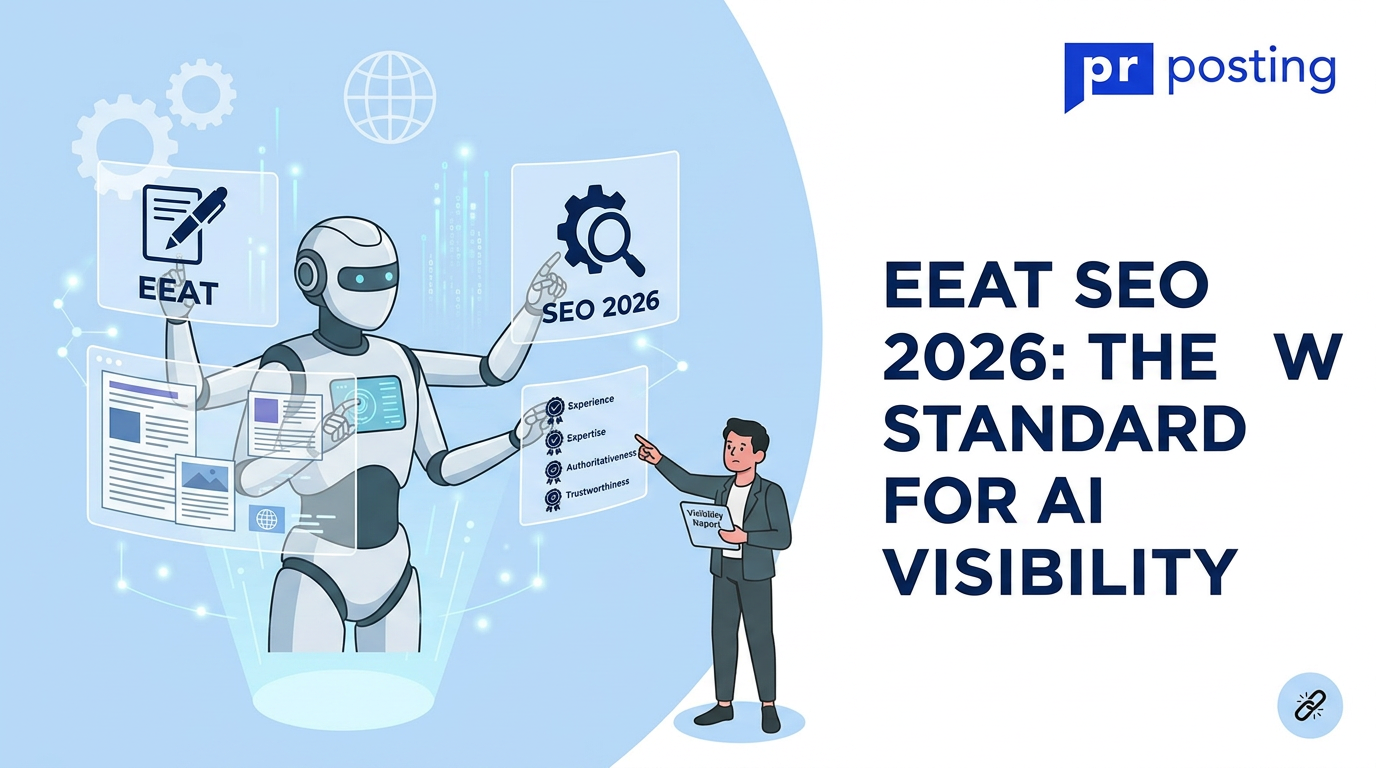
EEAT SEO 2026: The New Standard for AI Visibility
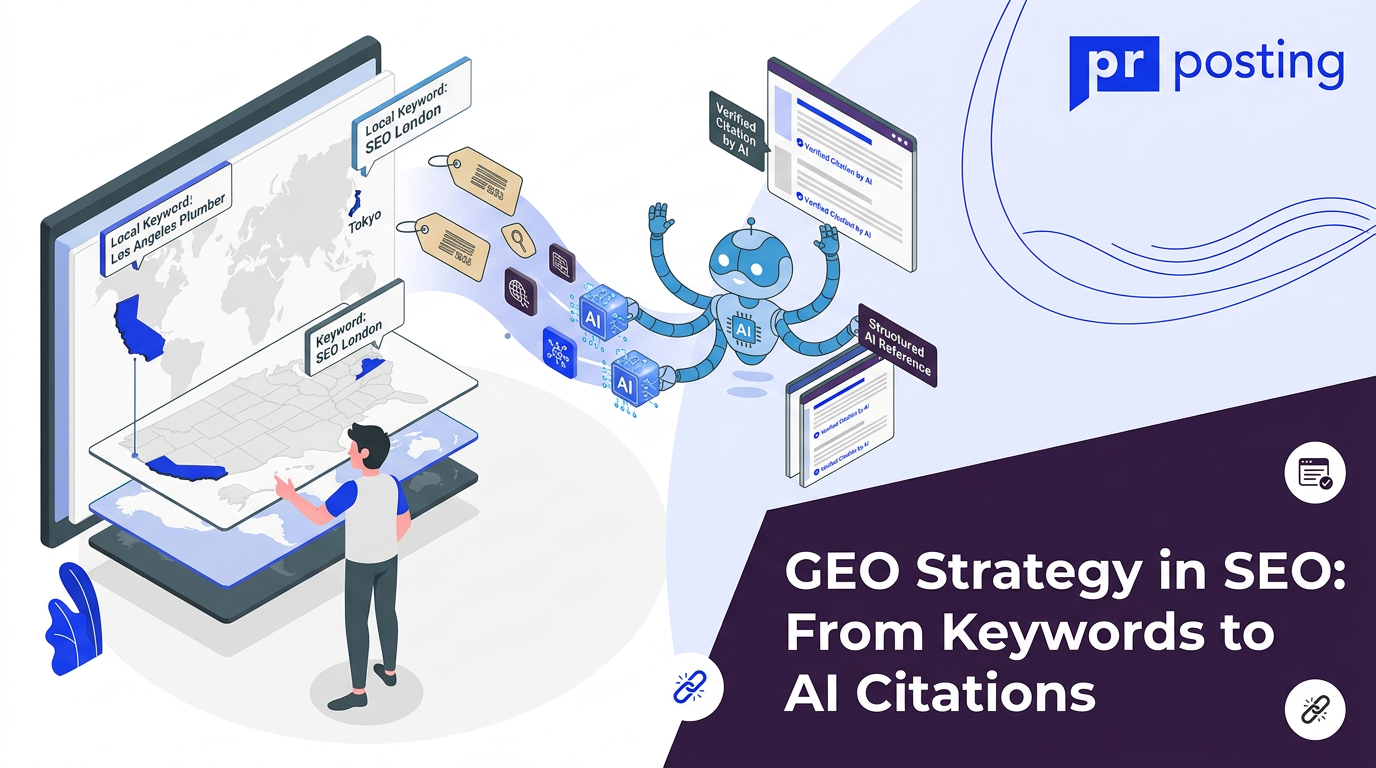
GEO Strategy in SEO: From Keywords to AI Citations