
GEO Strategy in SEO: From Keywords to AI Citations

This method prioritizes building trust with LLMs rather than just winning a click.
A successful GEO strategy in SEO ensures your brand becomes the primary source cited by AI systems like ChatGPT, Gemini, Perplexity, and Google AI Overviews.
Key Takeaways
- Zero-Click Dominance: 80 % of search queries in 2026 result in no website visits.
- Trust over Traffic. AI engines favor verified entities over simple keyword matches.
- Knowledge Integration. Brands must enter the AI Knowledge Graph to stay visible.
- Citation Velocity. High citation rates in LLMs correlate with a 40% higher conversion rate.
- Verified Grounding. AI uses authoritative data to ground its conversational output.
What is the GEO Strategy?
A GEO strategy is the deliberate mapping of brand data to be easily digested by AI. It moves beyond keywords to focus on entity relationships and factual density.
This approach creates a digital footprint that AI models recognize as a reliable source of truth.
By structuring information for AI consumption, you ensure your brand appears in AI responses. The shift toward AI search means visibility is now synonymous with citation.
Now users prefer chat interfaces for complex research. If your content lacks clear, factual nodes, LLMs will simply ignore it.
Reddit discussions also suggest that users trust AI citations more than sponsored links.
Recent threads in r/SEO highlight that “source transparency” is the new ranking factor for 2026.
Primary Metric Shifts for an Effective GEO Strategy
| Metric | Traditional SEO | Geo Strategy SEO |
| Primary Goal | Search Engine Rank | AI Model Citation |
| Success Signal | Organic Click Rate | Entity Attribution |
| Content Focus | Keyword Density | Factual Saturation |
What is the Difference Between SEO and GEO Strategy
Traditional SEO targets ranking positions for specific terms. A GEO strategy for SEO seeks to validate your brand as an essential entity within an AI’s internal map.
Traditional SEO asks “How do I rank first?” while GEO strategy asks “How do I become the answer?” This transition requires moving from hyperlinked pages to verified knowledge nodes.
Traditional SEO relies on backlinks and metadata. SEO and GEO strategy differ because the latter feeds the model’s logic.
AI models do not “browse” like humans. They retrieve pre-processed tokens. SEO uses keywords. GEO uses entities.
- SEO targets humans. GEO targets LLM training sets.
- SEO is about traffic. GEO is about authority.
Why Does Your Company Need a GEO Strategy?
Companies need a GEO strategy because AI interfaces now act as the primary gatekeepers of information. Without a strategy, your brand remains a ghost in the machine.
Users now expect instant, summarized answers without clicking through multiple tabs. A GEO strategy places your brand directly into these summarized responses.
Most users never leave the AI interface. Why would they? The answer is right there. If you don’t provide the data, your competitor will.
Why Do Companies Need GEO Strategy?
The answer is simple: survival. Enterprise brands without an AI GEO strategy have lost between 30% and 70% of their organic traffic over the past year.
How to Build a GEO Strategy From Scratch
To build a GEO strategy from scratch, you must audit current AI visibility, mapping natural language prompts and embedding high-density data into modular content blocks.
Constructing a GEO strategy requires auditing how LLMs currently perceive your brand. Success hinges on shifting from “ranking” to becoming a verified data source for AI response grounding.
How to Implement GEO Strategy for Your Brand
Building a GEO strategy for SEO starts with a visibility audit using tools like Adobe LLM Optimizer.
You must identify which prompts currently trigger your brand name. Next, create a GEO strategy template that replaces keyword lists with natural language “Prompt Libraries.”
These libraries mirror how users actually talk to chatbots. Structure every page with clear “Answer Blocks” at the top. These blocks should contain 40 to 70 words of pure fact.
GEO strategy requires proof. AI models prioritize consensus. Content must include unique statistics.
A recent study shows LLMs prefer “chunked” data for citations. Ground your claims in reality.
- Audit AI visibility with specialized tools.
- Build a library of customer prompts.
- Place direct answers at section starts.
- Inject verified, unique data points.
Who Should Own the GEO Strategy in a Company?
The SEO Lead manages the technical architecture of a GEO strategy.
However, the Content Architect and PR Lead must own authority signals and brand sentiment to ensure the brand remains a trusted entity.
Cross-functional ownership is mandatory for an AI GEO strategy.
Collaboration between search experts, data officers, and PR ensures brand facts remain consistent across all LLM training sets.
Defining Ownership Roles
GEO strategy for enterprise brands involves many departments.
The Chief Data Officer often verifies the facts. This prevents AI from generating false product characteristics.
The PR team influences the broader network of mentions that LLMs use for sentiment analysis.
How to Scale GEO Content Strategy
Scaling a GEO strategy requires moving away from manual writing. Use templates to ensure every piece of content provides information that AI agents can easily summarize.
To scale, companies must use a GEO strategy template that automates the inclusion of high-value entity data.
This ensures consistent AI citation across thousands of queries.
- Use entity-based templates for consistency.
- Add “Reasoning Blocks” for product comparisons.
- Cite regional-specific statistics and laws.
- Monitor localized AI response patterns.
Advanced Scaling and Targeting
A brand can use templates to add a “Why this is a top-rated product” section to every page. This helps AI agents build comparison lists.
AI models are getting localized. A law firm should cite specific regional court rulings. This makes the firm a “Hyper-Local Entity.”
Recent findings shared on Reddit suggest that local citation frequency is now a primary trigger for AI Overviews in 2026.
Data shows that local AI answers rely on specific regional data points.
Local factual density is the fastest way to win local AI search.
What KPIs should GEO strategy track?
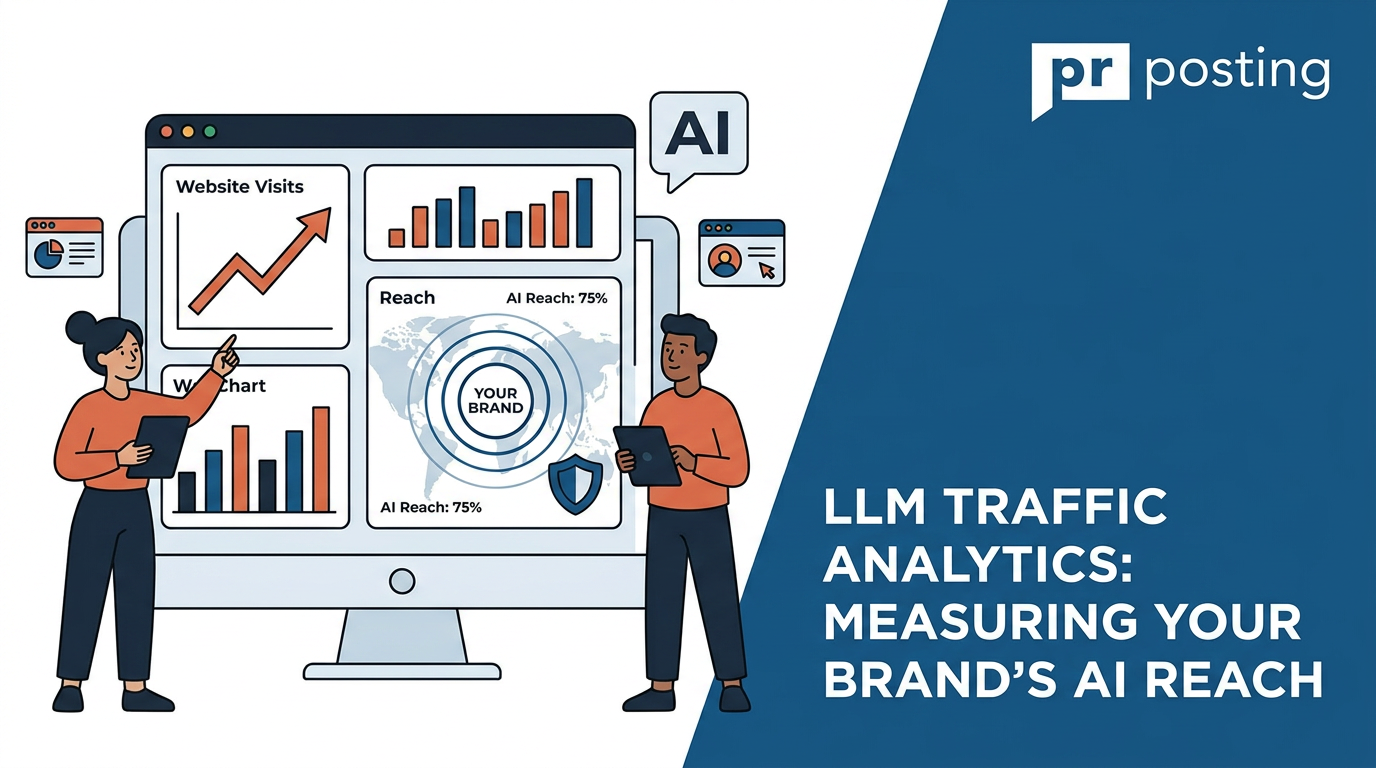
GEO strategy for SEO depends on tracking citation frequency, brand sentiment within model weights, and the share of voice in AI responses.
Unlike traditional clicks, these metrics measure how often an LLM validates your brand as a primary knowledge source for user queries.
Brands must monitor the Citation Rate and Semantic Compatibility to track AI influence.
These metrics shift focus from simple traffic to becoming a verified entity within the internal Knowledge Graphs of major AI models.
- Measuring impact requires a fresh dashboard. You need to know your Citation Rate. This is the percentage of AI answers that link to your site.
- Next, track Brand Sentiment in AI. Models assign a tone to your brand. Is it positive? Is it neutral?
- You must also calculate the Share of Answer. Compare your mention frequency against rivals.
- Finally, check Semantic Compatibility. This measures how well your content embeddings match user intent vectors.
Who to Partner with for a GEO Strategy?
Selecting GEO strategy partners requires checking for data science proficiency and knowledge modeling expertise.
The ideal partner moves beyond ranking keywords to actively managing your brand’s “Model Influence” across diverse Large Language Models and specialized answer engines.
Partnering with experts ensures your brand data remains grounded and free of hallucinations.
Technical partners focus on Knowledge Modeling to help your content become an authoritative source for AI retrieval systems.
In-house teams often lack deep data science skills. This is fine. You can hire GEO strategy partners.
These experts specialize in LLM Monitoring. They do not just promise page one. They promise model influence.
Look for agencies that understand vector databases. They should explain how your data feeds into the RAG (Retrieval-Augmented Generation) process.
Many pros on Reddit suggest that “Traditional agencies are struggling with the shift to vector search.”
It makes sense. If an agency still talks about “keyword stuffing,” walk away. You need a partner who treats your website like a structured database.
The GEO Strategy for SEO Checklist
An effective SEO and GEO strategy relies on a technical audit of extractable data nodes and structured entity health.
Use this checklist to ensure your content is modular, authoritative, and perfectly indexed for machine consumption.
This checklist prioritizes direct answer blocks and JSON-LD markup to facilitate seamless AI scraping.
High-density facts and updated Wikidata profiles serve as the foundation for long-term AI citation and authority.
- Direct Answer Test. Does your first paragraph answer a “Who” or “How” prompt?
- Entity Health. Is your Wikidata entry current?
- Structured Data. Do you use JSON-LD for Organization and FAQ?
- Authority Injection. Did you include a unique expert quote?
- Crawl Access. Is GPTBot allowed in your robots.txt?
| Factor | GEO Impact | Requirement |
| Factual Density | High | 3+ verified claims per section |
| Schema Markup | Critical | Nested Organization & Product JSON-LD |
| Prompt Alignment | Medium | Match content to natural language queries |
Common Mistakes in GEO Strategy
Most marketers overlook the fact that AI uses structured data to build its knowledge graph. If your schema markup is broken or missing, the AI cannot connect your product to the user’s intent.
Another error is ignoring PR. People think GEO is purely technical. It isn’t. AI looks for consensus.
If reputable third-party news sites do not mention you, the AI decides you are not an authority.
Why should it trust you? It won’t. You need external validation to win an AI citation game.
- Overlooking semantic proximity to top-tier industry entities.
- Ignoring the frequency of brand mentions in training data subsets.
- Failing to align factual claims across multiple digital platforms.
- Neglecting presence within specific knowledge graph nodes.
- Writing content that misses the “how” and “why”.
- Failing to address logical follow-up questions a user might have.
- Providing generic summaries instead of unique data or insights.
High-authority backlinks still matter, but the context of the mention matters more. A news story about your innovation provides the proof AI needs to recommend you.
Lastly, stop keyword stuffing. It actively hurts you. AI does not care about the number of times you repeat a phrase.
AI models are trained to spot patterns. If your writing is repetitive, the model might flag it as low quality.
Break the pattern. Use diverse vocabulary. Ensure your information is dense and useful.
FAQs
What is the GEO strategy for enterprise brands?
It is the centralized management of company facts to influence AI training data.
What KPIs should GEO strategy track?
Monitor Citation Share of Voice and Entity Attribution.
How does GEO influence PR strategy?
It shifts PR toward securing mentions in trusted datasets.
Who should own the GEO strategy in a company?
Usually, the CMO or Head of Search owns this, but it requires input from data engineering.
How do I build a GEO strategy for my brand?
Start by mapping your core entities and ensuring your Schema markup is perfect. Audit your current AI mentions and restructure for extractability.



More Like This

AI Search Audit: Why Your Brand is Invisible