
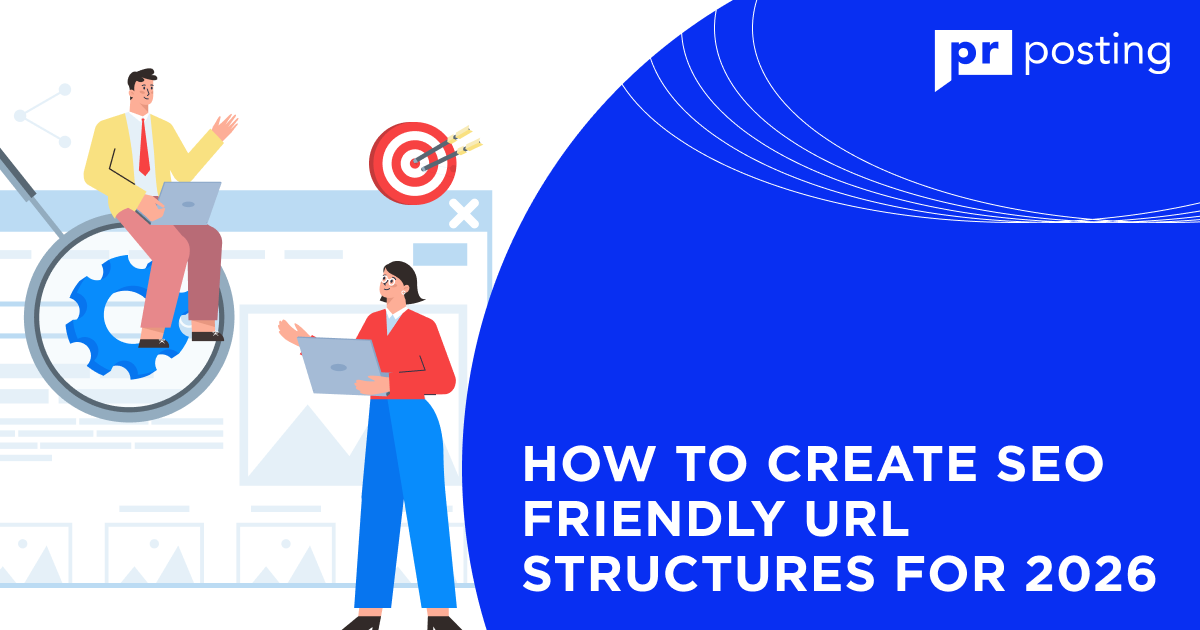
How to Create SEO Friendly URL Structures for 2026
The ideal URL uses HTTPS, lowercase letters, and hyphens to separate words.
Limit the number of words in the URL to three to five. Remove dates and unnecessary filler words.
This ensures that AI agents and humans can instantly determine your topic before you click the link.
Key Takeaways for 2026
- URLs are UX. Clean links build massive user trust.
- Redirect Logic. Use 301 redirects.
- Stability Wins. AI prefers URLs that never change.
- Semantic Depth. Keywords in URLs play an important role in website ranking.
What is a SEO Friendly URL?
It is a web address that uses plain, descriptive language to define a page.
These URLs replace cryptic ID numbers with meaningful terms. In 2026, LLMs treat the URL string as a primary semantic hint to categorize your content within the global Knowledge Graph.
Your link is a label. If your label is a string of random numbers, you are invisible.
AI models scan the address to predict what is on the page. Recent analysis shows that 72% of AI-generated search snippets prioritize URLs with clear entity matching.
Descriptive URLs provide a map for the bot. It is a simple fix.
| Feature | SEO Friendly | Non-Friendly |
| Protocol | HTTPS | HTTP |
| Case | lowercase | MixedCase |
| Separators | Hyphens (-) | Underscores (_) |
| Structure | /seo-tips | /?p=55291 |
How to Create SEO Friendly URL Slug
To create SEO friendly URL slug versions, you must strip away “stop words” like “and” or “the.”
Focus only on high-value entities. Industry data shows that shorter slugs (under 100 characters) are easier to share and rank. This brevity aids both memory and AI engine processing.
Your slug should be a summary. If your title is “10 Ways to Bake Bread,” your slug should just be /bake-bread/.
Simple and punchy. It stays relevant even if you change the number of tips later. This protects your rankings over time.
Step-by-Step Slug Optimization
- Remove Stop Words. Delete “a,” “in,” and “for.”
- Use Primary Keywords. Stick to the core entity.
- Hyphens Only. Google treats hyphens as spaces.
- Keep it Short. Aim for three to five words total.
How Should an SEO Friendly URL Be?
It should be predictable and flat. A flat hierarchy means fewer folders. Instead of /blog/2026/march/seo-tips, use /seo-tips/.
This brings the content closer to the root domain. It signals importance to AI engines immediately.
Pages with shallow URL structures see a faster indexing rate in LLM-driven crawlers.
If a user sees a mess of symbols, they hesitate. Trust is a ranking factor. Be clear. Be direct.
How do I make my URL SEO friendly?
Switch from dynamic parameters to static, descriptive text in your CMS. Ensure you use hyphens between words.
What is SEO friendly URL structure for categories?
Use a logical path like /category/sub-category/page. Keep it shallow to help crawlers find your data.
How to check SEO friendly URL health?
Use tools like Search Console to find crawl errors. Look for long strings or duplicate paths that confuse bots.
How to make SEO friendly URL in opencart?
Enable SEO URLs in the server settings. Then, fill in the “SEO Keyword” field for every product and category manually.
Comparison: Bad vs. SEO-Friendly URLs
| Feature | Bad URL (Dynamic) | SEO Friendly URL (Static) |
| Structure | example.com/index.php?id=982 | example.com/seo-friendly-urls |
| Separators | Underscores or none (seo_url) | Hyphens (seo-url) |
| Case | Mixed Case (Seo_Url) | All Lowercase (seo-url) |
| Length | Long and cryptic | Short and descriptive |
Summary
- Use HTTPS protocols for a trust boost.
- Prioritize top-level domains to localize your digital authority.
- Keep slugs short, clean, and free of filler words.
- Replace spaces with hyphens to aid bot parsing.
What is a Clean URL?
A clean URL provides a logical path to specific content. Its physical structure dictates your crawl budget plus extraction ease.
Search engines favor clean URLs. Messy strings confuse their algorithms.
A clear structure ensures that bots can easily understand the hierarchy of your pages. Simplicity remains the ultimate sophistication here.
The Protocol and Domain Node
Always implement HTTPS for every single page.
Google is increasing its trust level for secure protocols in 2026. This security signals the trustworthiness of both the browser and the search engine.
Choose a top-level domain like .com for a broad reach. Select a country code extension like .uk if you target specific regions.
This choice helps AI localize your authority. Your domain serves as the primary entity identifier.
Protect this identity with standard, recognized extensions.
| Component | Importance | Recommendation |
| HTTPS | High | Mandatory for trust |
| TLD | Medium | Match your target region |
| Subdomain | Low | Avoid unless necessary |
Semantic Slugs and Word Separators
The slug represents the final part of a URL. It identifies your specific entity. Use descriptive words here.
Google treats hyphens as spaces. It ignores underscores. Remove stop words like a, an, the, or of.
This action increases keyword density. It prevents spam filters from flagging your content. Keep the slug focused on the main topic.
URL Formatting Best Practices
Follow this checklist to refine your addresses. Consistent formatting builds structural trust.
- Use lowercase letters only. This prevents 404 errors.
- Use hyphens to separate words. Bots read these as distinct units.
- Limit the slug to 3 to 5 words. Brevity aids memory and indexation.
- Remove dates and numbers. This future-proofs your URL for later citations.
Does URL length affect rankings?
Yes. Shorter URLs are easier to index.
Can I change my URLs later?
You can, but avoid it. Changing URLs requires 301 redirects to preserve link equity.
Should I include keywords in the URL?
Include them, but avoid stuffing. Focus on describing the page accurately for the reader.
Do trailing slashes matter?
They can cause duplicate content issues. Pick one format and stick to it strictly.
How to Create SEO Friendly URLs: Technical Implementation
You create SEO friendly URL structures by mapping messy database strings to readable paths.
Whether you’re using a content management system or custom code, the goal remains the same: replace symbols with plain text.
This ensures that search engines process your content without confusion. It simplifies the search process for search engines powered by artificial intelligence.
How to create SEO friendly URL slug in PHP
First, convert all characters to lowercase. Then apply a regular expression replacement, replacing spaces with hyphens.
Finally, remove all trailing hyphens. This approach ensures correct link output and prevents encoding errors that cause broken links.
Follow these simple steps:
- Lowercase. Use the strtolower() function on the input.
- Sanitize. Apply preg_replace() to remove non-alphanumeric characters.
- Format. Swap remaining spaces with hyphens using standard replacements.
- Trim. Remove any hyphens resting at the string ends.
Simple code ensures your website runs quickly. It avoids heavy database lookups.
| Function | Action | Goal |
| strtolower | Lowercase | Consistency |
| preg_replace | Regex | Sanitization |
| trim | Cleanup | Precision |
Addressing Common Implementation Hurdles
People often struggle with server-level redirects. Apache servers require the mod_rewrite module.
Without it, your clean URLs will return 404 errors. Always verify your server environment before launch. Double-check your file permissions.
Sometimes the .htaccess file remains hidden. Look for it in your root directory. Fix these issues to stabilize your site architecture.
How do I make my URL SEO friendly if I use WordPress?
WordPress does this automatically. Go to Settings, then Permalinks. Choose the Post Name option.
What is SEO friendly url structure for subcategories?
Keep it shallow. Use domain.com/category/product. Avoid deep nesting beyond three levels.
How to check SEO friendly URL status after changes?
Use a crawler tool. It identifies broken links or bad redirects immediately.
Does a Bad URL Structure Kill My SEO
This makes searching difficult. You lose potential ranking signals when bots ignore unstructured strings.
Detailed technical implementation analysis
Modern web servers don’t magically guess your intent. They require explicit instructions to rewrite raw database queries.
Consider these server impacts:
- Proper rewrites prevent duplicate content penalties.
- Clean paths help your analytics remain accurate.
- Short URLs get more social shares.
- Faster parsing increases crawl frequency.
You might wonder why symbols cause such chaos. Browsers often encode special characters like spaces into unreadable strings.
These characters look like gibberish. They undermine user trust. Users feel safer when they click a clear link. Bots think the same way.
- You should completely remove strange characters. Use only letters, numbers, and hyphens.
- Check your server headers regularly. Use free tools to check status codes.
- Look specifically for 301 redirects. These tell bots that your old content has moved to the new location.
You preserve your ranking power this way. Never ignore these technical details. They determine your position in the results.
If you ignore the structure, you lose the game. Pay attention to how your CMS handles these paths.
Sometimes plugins override your settings. Audit your site once per month.
Clean links offer a massive long-term advantage. Your audience appreciates the effort. Google does, too.
Why AI Overviews Prioritize Clean URLs
Modern AI models like Gemini and Perplexity demand clarity. They search for canonical truth within your site architecture.
An SEO-friendly URL triggers these models to scan for high-confidence signals. They prioritize logical, descriptive paths over random text strings.
Your URL serves as the primary entity identifier for these machines. Clean structure verifies your topical authority.
Summary
- AI models equate readable URLs with higher information quality.
- Precise slug naming increases citation probability.
- Search bots process descriptive paths faster than encrypted ID strings.
- Canonical signals stabilize your ranking potential in AI overviews.
The AI Perspective and Canonical Truth
AI systems evaluate your URL to confirm topical relevance. They operate on probability models.
A messy URL creates uncertainty. Uncertainty lowers your citation score. You must provide clear, predictable labels for your content.
Use standard naming conventions. The AI then maps your page to its internal knowledge graph with ease. It treats these links as reliable evidence.
Citation Hooks and Information Gain
Citation hooks occur when an AI selects your source to justify its summary.
Your URL slug acts as a primary hook. If the slug matches the user query, the AI views your content as a direct answer.
It is more likely to cite your page than a generic one. You gain authority by providing exact matches.
Use the target keyword in your slug. Keep the format concise.
- Match the slug to your primary keyword.
- Remove stop words to tighten focus.
- Ensure the path reflects the page’s intent.
- Use dashes as separators for parsing.
If the search intent is how to check SEO friendly URL, your slug should be /check-seo-friendly-url.
This alignment informs the AI that the page provides the exact solution. It creates a strong link between your content and the query.
Final Thoughts
You have the tools to sharpen your site architecture today. Clean URLs do more than look pretty.
They provide the structural integrity that modern AI systems require for accurate indexing.
Every slug you optimize is a signal of intent. It tells the search engines exactly what you offer. You improve discovery by removing unnecessary noise.
Start by auditing your most important landing pages. Update the slugs to reflect current best practices. This simple action compounds over time.
As your site’s structure stabilizes, it builds trust. Don’t ignore these details.
Small technical changes can have a huge impact on rankings. By maintaining these consistent habits, you’ll build authority for years to come.



More Like This

UX and SEO Best Practices for 2026