
Fresh Content SEO: How to Scale Rankings
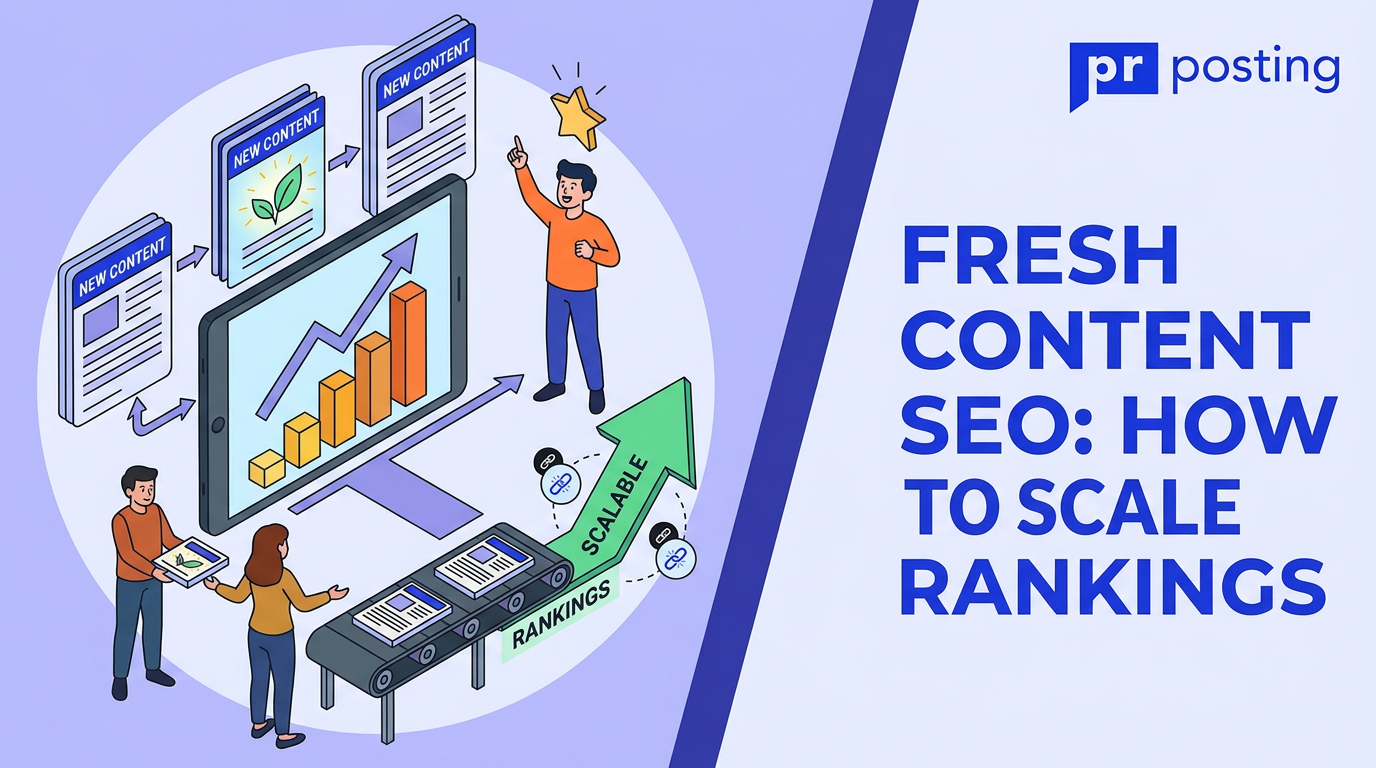
By adding new data, current entity relationships, and expert insights, creators trigger “recency” signals that boost visibility for time-sensitive queries.
This strategy ensures your brand remains a primary source for AI engines and Search Generative Experience.
Key Takeaways
- AI Discovery. Content updated within the last 90 days is 3x more likely to be cited in AI answers.
- CTR Boost: Modernizing headlines increases click-through rates by 47%.
- Entity Trust. Google prioritizes websites that add unique data to existing pages.
- Frequency Signal. High-performing domains refresh their core pages monthly to maintain topical authority.
- Crawl Budget. Frequent updates increase Googlebot crawl frequency.
What Is Fresh Content Meaning in 2026?
Fresh content meaning involves adjusting content to reflect new search trends, recent industry breakthroughs, and updated user expectations.
Modern AI engines distinguish between cosmetic “thin” updates and high-value updates that provide new utility to the reader.
This approach requires more than just changing a year in a title. You must analyze reasons fresh content is effective for SEO, such as capturing “new intent” as topics mature.
For instance, a 2024 guide on AI might focus on prompts. A 2026 update must focus on multi-agent orchestration.
Semantic freshness ensures your content remains “grounded” in the current reality of the Knowledge Graph.
Does Google Prioritize Fresh Content?
Google prioritizes fresh content primarily for queries where the most recent answer is objectively the most accurate.
While evergreen topics remain stable, “trending” or “news-oriented” queries trigger a bias toward recently indexed documents.
Does Google favor fresh content? Yes, specifically for “QDF” queries. If you search for “SEO software,” Google prefers lists reflecting current market pricing and features.
Does Google prefer fresh content for historical facts? No. The algorithm seeks stability for static knowledge but demands new data for volatile markets.
Industry experts on Reddit’s r/SEO suggest that “timestamp spoofing” without content changes now leads to algorithmic penalties.
Content Strategy: Query Freshness and Update Schedule
| Query Type | Freshness Priority | Update Cadence |
| Breaking News | Extreme | Hourly/Daily |
| “Best of” Lists | High | Quarterly |
| Core Tutorials | Moderate | Yearly |
How the Content Freshness Signal Works for SEO
The freshness signal is a mathematical trigger within the ranking engine.
When search engines detect a sudden influx of interest in a specific concept, they adjust the freshness boost for relevant URLs.
This ensures users find contemporary solutions rather than outdated advice.
Does Google prioritize fresh content based on text alone? No. It monitors “Query Deserves Freshness” (QDF) signals across the web.
If a concept suddenly populates social media or news feeds, Google shifts the SERP.
Fresh content marketing strategies succeed by anticipating these shifts.
You essentially “ride the wave” of rising search interest by having the most current document ready for indexing.
Factors Triggering QDF
- Search Volume Spikes. Rapid query frequency signals a need for new answers.
- Social Media Velocity. Massive discussions on platforms like X or Reddit act as a discovery layer for search bots.
- News Cycle Integration. When “Seed Sites” like the BBC or the New York Times cover a concept, the entire topic category receives a freshness weight increase.
How Often to Publish Fresh Content
Google and AI engines prioritize recency for queries that demand current data, meaning a news site and a local bakery operate on vastly different “freshness” horizons.
To maintain a competitive freshness score in 2026, content creators must follow industry standards.
Fresh content SEO for news and media entities requires multiple daily updates to capture the “Query Deserves Freshness” (QDF) spike.
Conversely, B2B SaaS entities should aim for 2–3 updates or new posts per week to signal topical authority.
E-commerce companies must provide daily updates to inventory-driven guides or product pages to satisfy the hunger for strictly fresh content in transactional searches.
- News/Media. Update multiple times per day to stay in the live AI discovery loop.
- B2B SaaS. 3–5 weekly deep-dives. B2B marketers now publish several times a week to maintain lead velocity.
- E-commerce. Daily updates help maintain 53% higher audience engagement with e-commerce product videos.
How to Find Inspiration for Fresh Content Ideas
Finding inspiration for fresh content involves monitoring the “Semantic Gap,” the space between existing search results and the evolving questions users are asking.
As AI Overviews change the way users interact with data, your content must pivot to answer the “next” logical question in the user’s journey.
How to find inspiration for fresh content ideas effectively? Start by analyzing the “Related Questions” and “People Also Ask” sections within AI Overviews.
These reflect real-time user intent shifts that traditional keyword tools often miss.
Use entity overlap analysis to identify subtopics your competitors have refreshed, ensuring your content marketing strategies remain comprehensive.
Finally, engage in social listening on Reddit. Unanswered forum threads are goldmines for identifying content gaps that AI engines are desperate to fill.
The “20% Rule” for Content Refreshes
To trigger a “freshness” signal in 2026, a simple timestamp change is insufficient.
LLMs and Google’s ranking systems require substantial updates, typically involving changes to 20-30% of the primary text.
Content Support Matrix by Industry
| Industry | Update Lifespan | Refresh Trigger |
| Tech/Electronics | 4–6 Months | 20% traffic dip |
| Finance/Health | 3 Months | New regulatory data |
| General Info | 12–18 Months | Intent shift |
This threshold ensures that the update will actually bring benefits and not just be a cosmetic change.
Reasons why fresh content is effective for SEO include the immediate reclamation of “decaying” traffic and the reinforcement of E-E-A-T signals.
The Step-by-Step Content Refresh Process
- Identify Decay. Target pages with a 15% traffic drop over 90 days.
- Add New Entities. Integrate 3–5 trending sub-topics relevant to the current year.
- Update Data Points. Replace 2025/2026 statistics with verified 2026 data.
- Rewrite the “Leads.” Optimize the first 200 words for AI extraction.
- Re-verify E-E-A-T. Update author credentials to reflect current projects or expertise.
Link Building for Fresh Content
Fresh content SEO acts as a catalyst for high-authority backlink acquisition by providing journalists and researchers with the most up-to-date data.
External sites prefer linking to a fresh content SEO update rather than obsolete studies.
This recency builds entity trust, signaling to search engines that your domain serves as a primary source for the latest industry developments.
Link building centers on the value of chronological relevance. High-quality referring domains prioritize active, accurate data to maintain their own credibility.
Position your brand as an industry leader in the Google Knowledge Graph.
The Modified Skyscraper Technique
Update your top-performing legacy content with 2026-relevant data to keep it relevant and authoritative.
Essentially, you are offering a superior alternative to referring domains.
- Find. Locate an older industry asset with hundreds of existing backlinks.
- Improve. Build a version with updated metrics and modern semantic entities.
- Reach Out. Inform about your more current resource.
Common Mistakes in Fresh Content SEO
Poor execution of a fresh content strategy can trigger negative quality signals.
“Date-Ghosting”
Google effectively identifies “Date-Ghosting,” where a creator modifies the “Published Date” without altering the actual substance of the page.
This deceptive tactic often results in a loss of topical authority and potential algorithmic demotion.
Fragmented Linking
Another frequent error involves “Fragmented Linking.” Webmasters often update a pillar page but leave internal links pointing to archaic versions. This confuses crawlers.
Ignoring “Entity Density”
The inclusion of new, related concepts that emerged since the last update limits your visibility in AI Overviews.
Broken Links
Outdated internal links dilute your new page’s authority.
Checklist for Fresh Content SEO
Maintaining a dominant position in 2026 requires a systemic approach to page modernization.
Use the following steps to ensure your fresh content marketing strategies align with modern retrieval standards.
- Audit Decay. Use Google Search Console to find pages with a traffic dip.
- Inject Entities. Embed new subtopics that are trending this month.
- Modernize Data. Swap 2025 figures for 2026 statistics immediately.
- Format Headers. Use “Entity-First” H2s to help AI systems parse data.
- Verify Schema. Ensure the dateModified property reflects your latest changes.
- Outreach. Start a “Freshness Campaign” to inform partners of your update.
Performance Benchmarks: Fresh vs. Legacy Content (2026 Forecast)
| Metric | Fresh Version (2026) | Existing Content |
| AI Citation Rate | 72% | 12% |
| Average CTR | 5.8% | 2.1% |
| Keyword Breadth | High | Narrow |
Updating existing content leads to a significant increase in AI-generated answers. This is because modern search models prefer verified and up-to-date data.
You also get a much higher click-through rate. People simply trust results that reflect current trends.
There’s another benefit, too. Keyword breadth allows your articles to capture new search queries that older versions simply miss.
Adjusting outdated content is vital if you want to remain visible in an AI-driven market. It works.
The importance of fresh content is crucial, as Google’s “QDF” algorithm prioritizes recently published documents.
To ensure your content ranks high in search results, you need to update at least 20% of your text regularly. This triggers reindexing and increases the likelihood of your AI being cited.
FAQs
How often to publish fresh content?
Publishing depends on your niche. News sites require hourly updates. B2B blogs should aim for 2–3 updates or new posts weekly to signal active authority.
How to find inspiration for fresh content ideas?
Monitor Google Trends and “People Also Ask” sections. These tools reveal the “gap” between existing content and what users currently need to know.
What is the importance of fresh content for AI Overviews?
LLMs cite sources that provide the latest data points. If your competitors have 2026 stats and you have 2024 stats, the AI will ignore your site.
Does Google prefer fresh content for all searches?
No. It prioritizes freshness for time-sensitive queries (QDF), while evergreen content stays stable for static topics like “how to tie a knot.”
What is the importance of fresh content for AI Overviews?
AI models prefer recent URLs to avoid “hallucinations” based on outdated data. Freshness increases your citation probability by up to 73%.
How often to publish fresh content for small businesses?
Updating your top 5 performing pages quarterly is often more effective than posting daily.
Does Google favor fresh content for all topics?
No. It prioritizes freshness for news, trends, and “Best of” lists where data changes quickly.
How often to publish fresh content for SEO?
Aim for 2-3 significant updates per week if you occupy a volatile industry like Tech or Finance.
What is the best fresh content marketing strategy?
Use the “20% Rule” to refresh your top-performing 50 pages every six months.



More Like This

Earn More AI Citations with GEO in Finance
Pagination SEO Best Practices for 2026 Rankings