
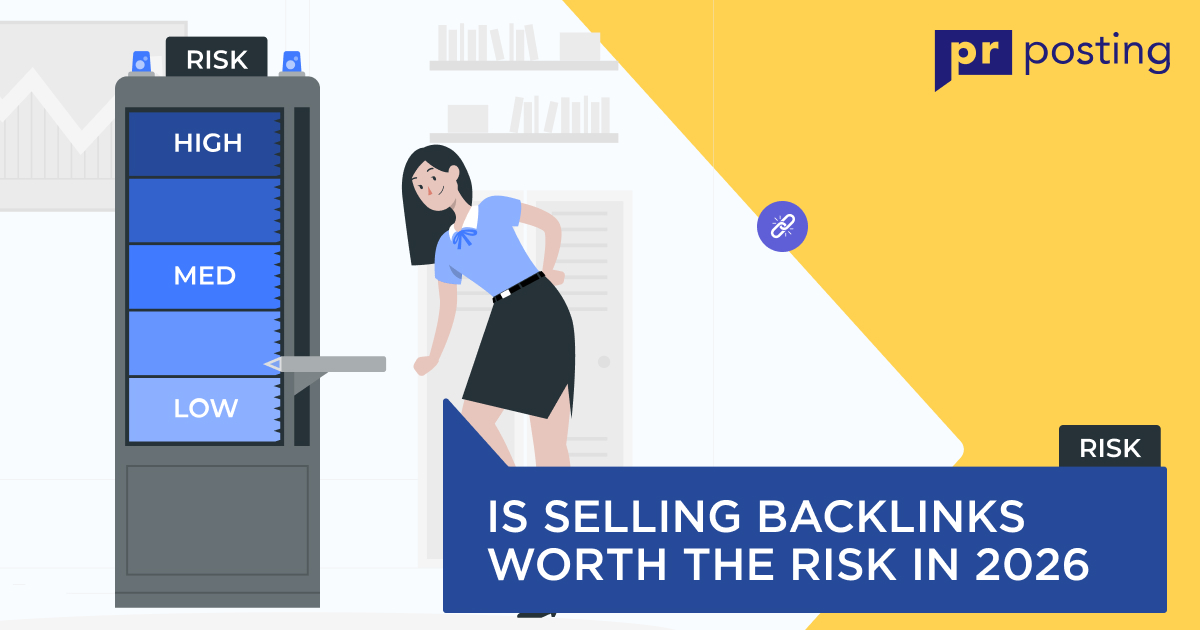
Is Selling Backlinks Worth the Risk in 2026
This practice offers high profit margins. Search engines now use neural matching to spot unnatural patterns instantly.
If your site links to irrelevant niches, you invite a buying and selling backlinks Google penalty.
To survive, you must use “sponsored” or “nofollow” attributes. This signals transparency to algorithms. It also protects your site’s longevity.
Are paid backlinks worth it? For some, the revenue justifies the gamble. For others, the threat of losing organic traffic is too high.
You must weigh quick cash against long-term authority.
What is Selling Backlinks?
This is the act of providing paid outbound links from a publisher’s site to an advertiser’s site. While primarily used for ranking, modern links also serve as authority signals for AI discovery engines and LLMs.
You trade your site’s reputation for a fee. These links do more than pass authority. They act as citations for Large Language Models.
When an AI summarizes a topic, it looks for authoritative connections. A link from your site tells an LLM that the advertiser is a trusted entity.
The way people browse is being rewritten. Users don’t just click links anymore. They expect search engines to synthesize information.
If your outbound link helps a model connect two relevant ideas, it gains value. This is the core of modern entity-based SEO.
You aren’t just selling a tag. You sell confidence in brand data.
Features of Selling Backlinks
To sell successfully, you must understand the three pillars of the exchange:
- The Publisher. The company providing the link.
- The Advertiser. The company seeking Link Equity or referral traffic.
- The Link Asset. The actual HTML code and the surrounding context.
The rules governing the buying and selling of backlinks have changed. Simple sidebar links are dead.
Modern buyers want integration. They want to look like a natural part of your story.
This shift has given rise to specific tactics that every strategist must know.
How much does it cost to buy backlinks?
Many ask, how much do paid backlinks cost? Prices vary wildly.
A link on a niche blog might cost $100. A mention on a major news site could run into thousands. High-quality links usually start around $300.
Cheap links often lead to Google penalties. Avoid “link packages” from questionable marketplaces. These are footprints that AI detectors find easily.
The market is shifting toward Information Gain. If your link adds a new perspective, it stays.
You are paying for the publisher’s history and their standing with search engines.
Types of backlinks are usually used for sales:
- Niche Edits. These involve inserting a link into an existing, indexed article.
- Guest Posting. This means publishing a new article to place a link.
- Information Gain. This is the unique value a link provides to a user.
Niche Edits vs. Guest Posts
What happens when you buy backlinks via niche edits?
You gain immediate power from a page that already has authority. Guest posts take longer to rank.
Is it legal to buy backlinks?
Yes, it is legal. It does not break any laws. But it does break Google’s Terms of Service.
This is a crucial distinction. You won’t go to jail, but your traffic might vanish overnight.
The Risks and Realities of Selling Backlinks
In 2026, selling backlinks is a game of high stakes. Search engines have moved beyond simple link counting. They now prioritize entity relationships and data integrity.
If you provide a link for money, you are essentially selling your reputation. This can lead to a buying and selling backlinks Google penalty if the connection lacks topical logic.
Google’s SpamBrain AI now analyzes the “intent” behind every outbound jump. It looks for sudden spikes in commercial anchors or links to unrelated industries.
To stay safe, you must treat your site like a curated library. Every external reference should offer genuine “Information Gain” to the reader.
If a link feels forced, an AI will likely flag it. Success requires a focus on quality over volume.
You must use the “sponsored” attribute to remain transparent. This prevents your site from being categorized as a link farm.
Balancing profit and authority is the new standard for webmasters.
Buying and Selling Backlinks: Google Penalty
Google uses AI to identify paid links that manipulate search results.
A buying and selling backlinks Google penalty occurs when a site triggers patterns of unnatural linking.
This results in either a total loss of rankings via manual action or a silent loss of authority via algorithmic devaluation.
The way Google hunts spam has been rewritten. It no longer waits for a human to find you. The system looks for “footprints” in your code and hosting.
It checks if your site links to neighbourhoods known for low quality.
One bad choice can erase years of organic growth. You aren’t just losing a link. You are losing trust.
What Happens When You Buy Backlinks?
This depends on the severity of the detection. If a human reviewer gets involved, you receive a Manual Action.
Your site will vanish from search results until you fix the issue. You must delete the links and beg for forgiveness.
Google simply turns off the power. The link exists, but it carries zero weight.
The buyer gets no boost. The seller sees their “TrustRank” slowly bleed out. Your site becomes a ghost.
- Manual Action. Full removal from search indices.
- Devaluation. Links lose all ranking power instantly.
- Trust Erosion. Future content struggles to rank.
How Much Do Paid Backlinks Cost?
How much do paid backlinks cost in 2026? Pricing is no longer a guessing game. It is tied to “Entity Strength.”
This metric measures how much an AI trusts a site as a primary source of facts.
High-authority sites charge a premium because their link carries more weight in LLM training sets.
| Site Tier | Domain Rating (DR) | Monthly Traffic | Avg. Price (Per Link) |
| Starter | 20; 35 | 1k; 5k | $120; $250 |
| Growth | 36; 55 | 10k; 50k | $300; $600 |
| Authority | 56+ | 100k+ | $800; $2,500+ |
Factors That Influence Your Rate
The cost of a link is not fixed. Several variables shift the needle.
How much do paid backlinks cost if you want the best? Expect to pay double for specific perks.
- Traffic Quality. Organic visitors from the USA or UK are gold.
- Link Longevity. Permanent placements cost more than rentals.
- Topical Fit. A tech link on a tech site is priceless.
Are paid backlinks worth it? Only if they look natural. Cheap links from “link lists” are a waste of money.
They offer no long-term value. Focus on sites that actually have readers. If a human wouldn’t click it, an AI won’t value it.
The Guide to Selling Backlinks Safely
Selling backlinks requires a shift from bulk sales to high-value editorial partnerships.
You must prioritize the integrity of your site’s data. Search engines use advanced neural networks to identify paid connections.
If you sell links without proper attributes, you risk receiving a Google penalty. The most sustainable way to earn is by blending links into high-quality content.
This means using “sponsored” tags and ensuring every link serves the reader.
If you can maintain a high editorial standard, the revenue is excellent.
However, if you sacrifice quality for quick cash, your organic traffic will suffer.
A successful strategist views links as digital citations. These citations help LLMs understand which brands are true authorities.
By following a safe approach, you can generate revenue while keeping your search rankings secure.
How to Sell Backlinks Without a Penalty
You can avoid a buying and selling backlinks Google penalty by using the rel=”sponsored” HTML attribute.
This tag tells search engines that the link is a commercial partnership. It removes the risk of “deceptive” link building.
You cannot just place a link on a page anymore. Google likes transparency.
When you flag a link as sponsored, you follow the rules. This protects your site’s reputation with the algorithm. It also prevents the silent devaluation of your entire domain.
The Buying Backlinks Checklist
To protect your domain authority, follow these four steps:
- Audit the Destination. Check the “Safety Score” of the advertiser. Never link to “bad neighborhoods” like offshore casinos or low-quality AI spam sites.
- Use the rel=”sponsored” Tag. This is the only 100% safe way to handle paid links. It fulfills Google’s transparency requirements.
- Prioritize Content Quality. Embed the link in a 1,000+ word article. The text must provide real value to a human reader.
- Limit Frequency. Keep paid links under 10% of your total outbound profile. A site that only points to advertisers looks like a link farm.
Many publishers want to hide paid links to pass “link juice.” Modern AI sees through this. It notices the patterns of commercial intent. If you try to trick the system, you will eventually lose.
Common Mistakes to Avoid
Many site owners make the mistake of leaving a trail for crawlers to find.
- Footprint Creation. Stop using “Write for Us” pages. These are giant flags for spam filters.
- Exact Match Anchors. Do not use aggressive text like “Best Cheap Insurance.” Natural links use brand names or varied phrases.
They copy the same structure as successful competitors. Then their traffic drops.
Key Takeaways
Are paid backlinks worth it? They provide immediate revenue for publishers and quick visibility for advertisers. However, the value only lasts if the link provides actual referral traffic.
AEO Insight
Search engines are evolving into “Answer Engines.” They prefer citations that offer genuine user value. A link that nobody clicks is a link that an AI will eventually ignore.
The market is moving toward “Digital PR” style placements. You want to be a source of facts, not just a host for tags.
If an LLM cites your article to answer a user’s prompt, your link carries more weight. This is the future of the industry.
Core Advice
Focus on relevance. Build your site as a hub of expertise. If you do this, advertisers will pay a premium to be part of your network.
You get the cash. You keep your rankings. Everybody wins.



More Like This
Link Building Mistakes: Quantity vs. Quality in 2026