
Link Building Scalability: Systems, Costs, and Strategies
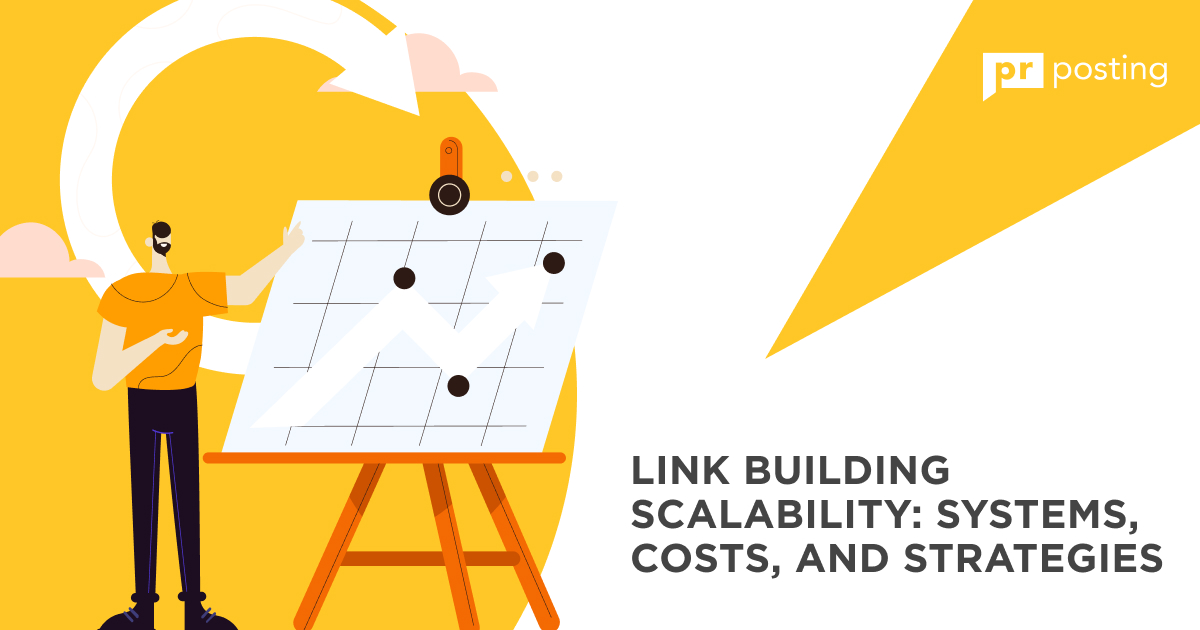
It shifts the focus from manual outreach to a system where quality remains high at a larger volume.
You achieve this by combining link building scalable systems, high-value backlinks, and modular workflows.
In 2026, this approach ensures your brand becomes a core entity in AI knowledge graphs.
By automating the checking process and using link building scalability strategies, you decouple growth from linear labor costs.
You are building an engine that earns mentions while you sleep.
What is Link Building Scalability?
Link Building Scalability Explained
It is the underlying infrastructure that allows a link-building campaign to grow.
Link building scalability means your link building scalability cost stays manageable as your output rises.
This requires documented logic, clear data signals, and a product-oriented approach.
The Link Building Scalability Process
Why does link building scalability matter?
To ensure stable growth, a product-focused approach is essential. Without it, your SEO metrics will reach their limits.
As a result, you’ll end up in a vicious cycle of “random marketing efforts” that never produce results.
1. Linkable Assets (The Product)
A scalable system starts with something worth linking to.
You cannot scale outreach for thin content without damaging your brand reputation.
If the product is bad, no amount of white label link building scalability can save it.
Original Data and Research
Publishing unique statistics or industry surveys creates a passive link magnet. People love citing fresh numbers.
- Conduct annual industry surveys.
- Analyze your internal proprietary data.
- Turn these findings into readable charts.
- Let the AI models find your data.
When journalists and AI engines search for data, they cite you as the primary source.
This allows you to accumulate backlinks over time automatically. It’s a perfect scalable link-building strategy that allows you to “set it and forget it.”
Free Interactive Tools
Calculators, templates, or small widgets offer high utility. They solve a specific problem instantly.
- Build a simple ROI calculator.
- Offer a free Google Sheets template.
- Create a “Checklist Generator.”
- Keep the UI clean and fast.
This increases the “conversion rate” of your outreach. Why? Because you are providing a solution rather than just asking for a favor. People link to tools because they are useful to their own readers.
2. Standard Operating Procedures (SOPs)
Scaling is impossible if the strategy exists only in one person’s mind.
Documented processes allow you to delegate tasks without sacrificing quality. You need an action plan that new employees can follow from day one.
The Vetting Matrix
The Vetting Matrix is a standardized checklist used to determine if a site is link-worthy.
This eliminates the guesswork. You don’t want to waste time on abandoned sites.
- Traffic Trends. Is the site gaining or losing traffic?
- Topical Relevance. Does the site actually talk about your niche?
- Safety Signals. Does it look like a link farm?
- Engagement. Do humans actually comment or share their content?
This filters prospects based on data, not gut feelings. It keeps your link profile clean.
Outreach Personalization Tiers
Use a system that categorizes tiers into different effort levels:
| Tier | Effort Level | Target Audience | Strategy |
| Tier 1 | 100% Manual | Industry Giants | Deep research; 1-to-1 emails. |
| Tier 2 | Semi-Automated | Niche Blogs | Modular templates; custom intros. |
| Tier 3 | Automated | Brand Mentions | Bulk outreach for unlinked names. |
Tier 1 is for high-value industry leaders. You read their latest book before emailing.
Tier 2 uses modular templates for niche blogs. You swap out a few lines to show you actually looked at their site.
Tier 3 is for bulk outreach, like finding unlinked brand mentions.
Using these link building scalability strategies ensures your team spends time where it actually counts.
You get the same amount of automation as a manual campaign, but with the same precision.
Link Building Scalability Strategies
Link building scalability refers to the specialized technology and partner ecosystems that automate the manual labor of backlink acquisition.
These systems integrate prospect discovery with automated outreach and reporting. By using these tools, brands reduce the time spent on repetitive data entry.
Successful link building scalable systems allow teams to increase their output without hiring more staff.
This creates a sustainable path to higher rankings and better entity authority. Essentially, it is the engine that drives your organic growth.
White Label Link Building Scalability
White label link building scalability is a partnership model where specialized agencies execute the tasks of prospecting and outreach on behalf of another firm.
It removes the burden of managing large teams of link builders.
Consequently, agencies can scale their client results rapidly. It provides a flexible way to handle volume without the overhead of permanent staff.
Managed Fulfillment Models
Growth often stalls because checking thousands of sites takes too long.
Partnering with a specialist solves this. You hand over the manual work. They deliver the vetted links.
This division of labor keeps your strategy clean. Your internal team focuses on content and technical health.
The partner focuses on the heavy lifting. It is about playing to your strengths.
Cost Efficiency vs. Quality Control
Choosing the right model affects your link building scalability cost and final results. Every path has a trade-off between price and safety.
| Model | Avg. Cost per Link | Scalability Potential | Risk Level |
| In-House Team | $400 to $600 | Low | Low |
| White Label Partner | $150 to $300 | High | Medium |
| Niche Marketplace | $80 to $200 | Very High | High |
High costs in-house reflect salaries and benefits.
White label link building scalability offers a middle ground. It balances professional vetting with lower per-unit pricing. Marketplaces offer speed but carry the most risk of penalties.
AI-Augmented Prospecting
AI-augmented prospecting uses machine learning to find link opportunities based on semantic relevance.
Instead of just checking metrics like Domain Rating, these systems read the actual text. They identify if a site truly understands your topic.
This ensures your links are placed in a context that AI models recognize. It bridges the gap between traditional SEO and future answer engines.
LLM-Powered Semantic Filtering
Modern link building scalability strategies use AI to analyze topical alignment. This is a major shift.
Old tools looked at numbers. New tools look at concepts.
- AI reads the prospect’s recent articles.
- It compares their entity map to yours.
- The system flags sites with high semantic overlap.
- This builds your status as a core entity.
Actually, this is how you win in 2026. Search engines now value the “why” behind a link.
If a high-authority site mentions you in a relevant paragraph, your trust score spikes.
AI filtering ensures you don’t waste time on irrelevant pages. It makes every link count toward your AI Overview visibility.
Link Building Scalability Software
Investing in link building scalability software is the only way to move beyond the limitations of manual spreadsheets.
In 2026, the market is split between all-in-one SEO suites and specialized AI outreach platforms.
Choosing the right tool depends on whether you prioritize deep data analysis or automated email sequences.
1. Pitchbox (The Enterprise Powerhouse)
Pitchbox remains the gold standard for large agencies.
It integrates directly with top data providers like Ahrefs and Majestic. This allows you to pull SEO metrics into your outreach workflow instantly.
- Best for. High-volume agency teams.
- Key Feature. Productivity workflows that guide users through prospecting to follow-up.
2. Respona (The AI-Native Specialist)
Respona has moved ahead by making AI the core of its system. It uses a built-in search engine to find opportunities and an AI assistant to write your emails.
- Best for. B2B SaaS and digital PR.
- Key Feature. An AI personalization engine that finds specific quotes from a prospect’s article to include in your pitch.
3. BuzzStream (The Relationship CRM)
BuzzStream functions more like a traditional CRM than a simple email sender.
This is ideal for teams that value long-term relationships with influencers more than one-time link purchases.
- Best for. Relationship-based link building.
- Key Feature. The “Buzzmarker” extension that lets you vet sites and find contacts while browsing the web.
4. Postaga (The Automation Engine)
Postaga specializes in finding “linkable” reasons to reach out. It scans your content and automatically suggests campaign types like skyscraper or resource page outreach.
- Best for. Solo SEOs and small teams.
- Key Feature. Automated campaign generators that find prospects based on your specific URL.
5. Ahrefs Brand Radar (The AI Visibility Tracker)
This is a newer entry focused on the shift toward AI search. It tracks where LLMs like Gemini or Perplexity cite your brand.
- Best for. Modern entity-based SEO.
- Key Feature. “Citation gaps” where AI mentions competitors.
Link Building Scalability Software Comparison
| Software | Core Strength | Starting Price (Approx.) | AI Integration Level |
| Pitchbox | Enterprise Workflows | Custom (High) | Moderate |
| Respona | AI Personalization | $198/month | Very High |
| BuzzStream | Relationship Tracking | $24/month | Low |
| Postaga | Campaign Automation | $99/month | High |
| Ahrefs | Data Depth | $129/month | High (Brand Radar) |
Actually, most successful teams use a mix of tools rather than a single tool.
You might use Ahrefs for the initial data pull and Pitchbox for the heavy lifting of the outreach itself.
This combination ensures your link building scalability strategy is backed by the best possible data.
Which Model Fits Your Workflow?
If you are struggling to choose, consider your team size.
Small teams often thrive with Postaga because it thinks for you.
Large agencies need the oversight provided by Pitchbox or BuzzStream to avoid emailing the same person twice.
Step-by-Step Guide to Link Building Scalability
To transition from manual effort to a scalable system, you must standardize your output through a repeatable four-step process.
This involves defining a high-value linkable unit, using automated logic for prospecting, enforcing a rigorous quality gate, and executing multi-channel outreach.
By decoupling growth from manual hours, you stabilize your link building scalability cost while increasing authority.
This systematic approach ensures that every acquired link satisfies the semantic requirements of modern AI search engines.
It turns a chaotic task into a predictable link-generating system.
How Does Link Building Scalability Work?
Building a system requires moving away from feelings. You need a map.
Most people fail because they try to scale chaos. Instead, you should follow this logical progression to ensure your link building scalable systems actually function.
Step 1: Define Your Linkable Unit
Your “Linkable Unit” is the specific value you offer a webmaster. You must decide on your core proposition before sending a single email.
Are you sharing a unique data point? Perhaps you have a free tool. A guest post can also work.
This unit acts as your currency. Without a strong unit, your outreach is just noise.
Step 2: Build the Prospecting Logic
Scalable prospecting relies on advanced search strings. You can use operators like “site:.edu” combined with “resource page” to find gold.
Tools like Ahrefs or Semrush allow you to export thousands of URLs in seconds.
This creates a massive pool of potential partners.
Step 3: The Quality Gate
A “Quality Gate” is your mandatory rejection phase. You apply your SOP vetting filters here. Check for sudden traffic drops.
Look for keyword relevance. If a site looks like a link farm, discard it.
This step ensures you never build links on penalized domains. It protects your site from toxic associations.
Step 4: Multi-Channel Outreach
Email alone is often ignored. You can scale by adding social signals into your sequence. Connect on LinkedIn. Engage with a post on X.
This multi-touch approach increases response rates significantly. It proves you are a real person, not a bot.
Common Link Building Scalability Mistakes & Checklists
Even the best link building scalability strategies can fail if you ignore the basics. Avoiding these traps is essential for long-term safety.
Common Link Building Scaling Mistakes
Errors usually happen when speed exceeds logic.
- Quantity over Relevance. 100 random links matter less than 5 contextually aligned ones.
- Ignoring Link Velocity. Growing too fast with obvious footprints triggers spam filters.
- Generic Templates. Boring pitches lead to blacklisting.
Actually, the AI models of 2026 are very good at spotting patterns. If your links appear too fast or look identical, you will lose visibility.
The Scalability Checklist
Use this list to audit your current efficiency.
- Do we have a dedicated Linkable Asset?
- Is there a written SOP for prospecting and vetting?
- Are we using a CRM to track every relationship?
- Have we calculated our link building scalability cost per link?
Concluding Thoughts
Success in modern SEO requires a blend of human creativity and machine efficiency.
By building systems, you ensure your brand remains visible in both traditional results and AI overviews.
You are no longer just building links. You are establishing your entity as a trusted authority.
Start small. Document every movement. Then increase the volume.



More Like This
LLM SEO: How to Rank in AI Search