
Internal Linking SEO Benefits Every Site Needs
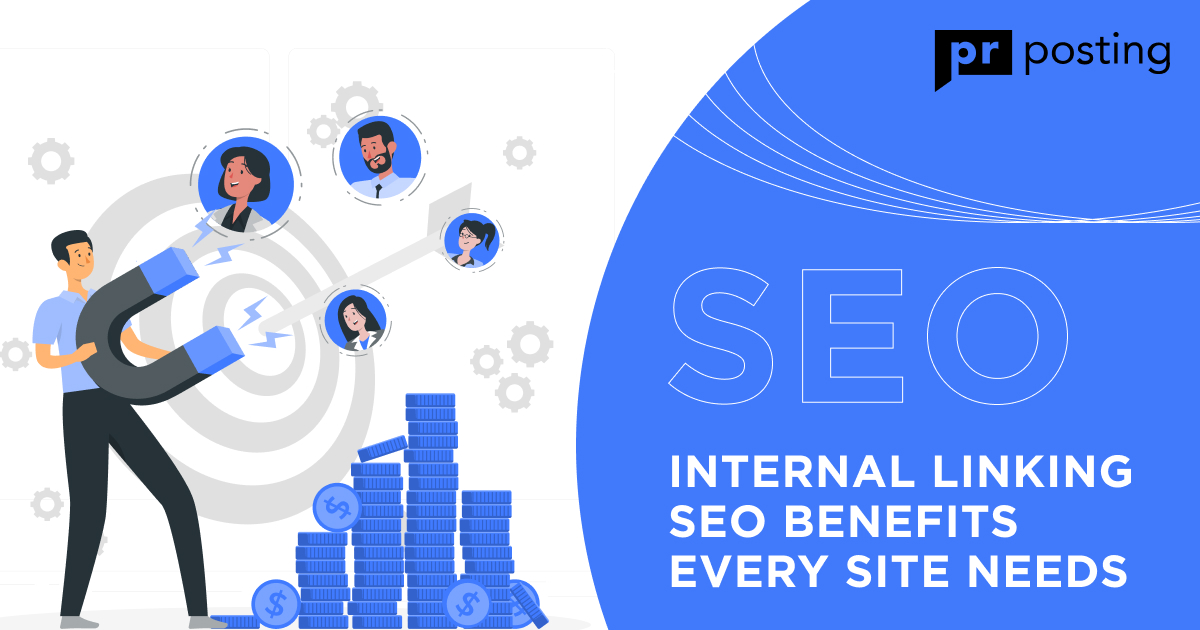
Internal linking SEO benefits include creating a digital map for both users and search engines. This distributes ranking opportunities across the entire domain.
Effective internal linking and SEO success go hand in hand because links establish a clear hierarchy.
Without a logical link structure, your best content stays hidden. Search engines cannot find what they cannot reach.
This article explores how internal linking boosts your visibility. We look at the technical necessity of links. We also discuss how they guide your readers.
You’ll understand how to use internal linking best practices recommended by SEO experts to increase organic traffic.
It is about more than just clicks. It is about building a knowledge base that search engines trust.
Let’s explore why internal linking and SEO are the secret weapons for your site’s growth.
Summary
Internal linking and SEO efficiency rely on hyperlinking two pages on the same domain. These links serve three main goals.
First, they allow bots to discover new content. Second, they signal which pages are the most important. Third, they help users find related information easily.
Sites with strong internal structures see better indexing and higher rankings for target keywords.
- Definition. A hyperlink between two pages on your own website.
- SEO Value. It spreads “link equity” or authority throughout your site.
- Crawling. Links act as pathways for Googlebot to find new URLs.
- Topical Relevance. Use descriptive anchor text to improve topical relevance.
What Is Internal Linking in SEO?
Definition and Purpose of Internal Linking
Internal linking is the process of connecting a source page to a target page on the same domain.
Its primary purpose is to establish site architecture. This is where things get difficult for many owners. They confuse navigation links with contextual links.
Navigation links live in your header or footer. They are for utility.
Contextual links live inside your sentences. These are far more powerful for internal linking and SEO. They tell search engines exactly what the destination page is about.
What Is an Example of an Internal Link?
It is any clickable text that keeps a visitor on your specific domain.
Internal Linking vs External Linking in SEO
Difference Between Internal and External Links
The main difference between internal and external linking is ownership.
You own your internal links. You choose the anchor text. You choose the destination and have total control.
External links lead to a different domain. These are like citations in a research paper. They prove that you did your job correctly.
- Ownership. Internal links are yours. External links are someone else’s.
- Control. You decide when to add or remove internal paths.
- Authority. Internal links move authority within your site. External links send it away or bring it in from outside.
What Type of Link Is Best for SEO?
Contextual, editorial links are the gold standard. These links appear naturally within a paragraph. They use descriptive anchor text.
Don’t just use “click here.” That tells Google nothing. Use words that describe the target page.
Descriptive text helps AI systems understand the relationship between your topics. This builds your “entity” authority in the eyes of modern search engines.
Internal Linking SEO Benefits
Internal linking SEO benefits focus on making your site easier for bots to read and share power across your pages. You need these links to help search engines see how your topics fit together.
If you connect related articles, you ensure that every page gets noticed. This is where things get difficult for most creators.
They forget that search spiders follow paths. Without these paths, your best work stays lost.
It turns out that a smart link structure clarifies the connection between different entities. This creates a map for the AI to follow. It is a direct way to prove your authority.
Stop hiding your content. Connect it.
Internal links also enhance user retention by providing logical paths to more detailed information, which signals high quality to modern algorithms.
Crawlability and Indexation
Search bots find pages by following links. Without them, bots cannot reach your content.
If a page lacks any external links, it becomes an orphan. Google often ignores these isolated pages.
A solid link structure ensures every URL gets indexed promptly.
Link Equity Distribution
Authority flows from your strongest pages to your newest ones. High-value pages, like your homepage or viral blogs, carry significant weight.
By linking from them to smaller pages, you pass along “link juice.” This helps lower-tier content rank higher without needing external backlinks.
Keyword Relevance and Context
Your anchor text tells engines what a page represents. Using descriptive anchors creates semantic relationships between your articles.
Relevant keywords help AI models categorize your niche.
User Experience and Engagement
Strong links keep people on your site. When users find helpful resources, they stay longer. This reduces your bounce rate.
It is quite simple. An interested reader views more pages. Search engines interpret this duration as a sign of trust and authority.
Does Internal Linking Help SEO?
Yes. It acts as a primary ranking signal for your site structure.
Search engines use these paths to find new URLs and determine which pages hold the most weight.
Webmasters treat pages as isolated files rather than a connected knowledge base. Standard keyword indexing relies on these links to crawl your domain efficiently.
Without them, your internal content remains invisible to the bots. High link density on a specific topic proves your expertise. It builds a map that search engines trust.
How Search Engines Interpret Internal Links
Bots look at how pages relate to each other. They see which topics you prioritize. A page with numerous internal links appears more important.
Internal Linking and AI Search Systems
AI models use links to build context. They look for entity reinforcement.
If you link “SEO” to a guide on “Technical Audits,” AI learns their proximity.
This helps you appear in AI Overviews. Clear connections prove you are a topical expert.
Internal Linking Best Practices for SEO
Anchor Text Guidelines
Avoid using the same keyword every time. It looks like spam.
You should match the user’s intent. If they want a tool, link with “SEO analysis software.”
Variety makes your link profile look natural. It helps bots understand nuances.
Page Depth and Link Placement
Make your best content easily accessible. Users should find any page within three clicks.
This click distance is vital. Links tucked away in footers have less value.
Place your most important connections high up in the body text. This gives them more weight.
When Should Internal Linking Be Used?
- New content. Link to it from existing high-traffic pages immediately.
- Content updates. Add links to newer, more relevant studies.
- Authority pages. Use these to boost your commercial or transactional landing pages.
Planning internal linking and SEO optimization is the best way to develop.
How Many Internal Links for SEO Do You Need?
There is no clear limit to the number of internal links required for successful SEO, but relevance remains the main limiting factor.
Most SEO professionals suggest three to five contextual links for standard blog posts.
Larger pillar pages may support dozens of links if they serve the user.
The goal is to facilitate logical discovery without overwhelming the reader or diluting the value of each path.
No Fixed Number Rule
Counting links is a distraction. Search engines care about context rather than raw math.
A page about broad topics needs more links than a narrow niche update.
Link density should reflect the depth of the information. Focus on the page’s purpose.
Practical Ranges by Page Type
- Blog posts. Three to eight links typically suffice.
- Category pages. These serve as hubs. They often link to twenty or more subtopics.
- Pillar pages. These massive resources might house fifty links to related sub-content.
How to Create an Internal Link
To effectively implement internal linking and SEO, start by mapping your core topics to identify content gaps.
Next, locate your most authoritative pages using Google Search Console data.
Insert links from these main pages to newer or lower-ranking pages using descriptive anchors.
Finally, perform a quarterly audit to fix broken links and update old content with fresh connections.
Map Core Topics
Group your articles into clusters. This is where things get difficult if your site is messy. Identify which page serves as the main authority for a subject.
Identify Authority Pages
Find the pages that already have external backlinks. These are your power sources. They possess the most link equity to share with your domain.
Add Contextual Links
Insert links within the body of your text. Avoid the footer for this purpose. Make the link feel natural.
Audit and Adjust
Check your work. It turns out that links often break when you change URLs. Use a crawler to verify every link stays intact.
SaaS Internal Linking Strategy
A successful SaaS internal linking strategy connects educational blog content directly to specific product features.
This creates a funnel that moves users from the problem-aware stage to the solution-aware stage.
By linking technical documentation to marketing pages, SaaS companies reinforce their product’s utility for both visitors and AI search crawlers.
Product Pages and Feature Pages
These pages need high visibility. Link to them from your most popular educational guides. This proves your software solves the issues you describe.
Blog to Product Links
Once you get a reader, show them the product. Use clear buttons or text links that highlight a specific feature.
Conversion-Focused Internal Links
Some links exist solely for sales purposes. They should be clearly visible. Place them where the user experiences the greatest difficulty in their work.
Internal Linking Tools and Automation
An internal linking tool helps scale the process by identifying missed opportunities and orphan pages across large domains.
These tools range from technical crawlers like Screaming Frog to CMS plugins that suggest links during the writing process.
While automation saves time, manual review ensures that anchor text remains relevant and high-quality for the intended audience.
Internal Linking Tool Types
- Crawlers. These map your entire site architecture.
- CMS plugins. These give real-time suggestions as you type.
When Automation Helps
Large sites with thousands of URLs cannot be managed by hand.
Content hubs benefit from automated scripts that suggest related reading. It turns out that SEO tools are great at finding orphan pages.
Common Internal Linking Mistakes
Frequent errors in internal linking best practices SEO include over-linking from a single page and using generic anchor text like “read more.”
These mistakes confuse search bots and provide little context to AI systems.
Ignoring orphan pages or leaving broken links creates a poor user experience, signalling to search engines that the website is not maintained or reliable.
Over-linking Pages
If every sentence contains a linking word, you’re doing it wrong. You’re weakening your power. Choose three great links instead of twenty mediocre ones.
Generic Anchor Text
Using the phrase “Click here” everywhere is incorrect. Search engines need to know what’s on the other side of the screen. Use descriptive phrases that contain plenty of nouns.
Ignoring Orphan Pages
Orphan pages have no incoming links. They are invisible. Always link back to new content.
Broken Internal Links
A link to a 404 page is a dead end. It hurts your trust. It turns out that bots stop crawling when they hit too many errors.
Internal Linking Checklist
- Identify priority pages. Which URLs must rank?
- Add contextual links. Place them in the body text.
- Use descriptive anchors. No “read more” buttons.
- Reduce orphan content. Ensure every page has a link.
- Audit quarterly. Use a tool to find new errors.
Key Takeaways for SEO and AI Search
Internal links define your site structure and help AI models map your expertise.
Context always beats raw link volume. Authority must flow intentionally from your strongest pages to your most important ones.
Modern search engines reward clarity and logical thought.



More Like This
Rental Link Services: Benefits and Risks